Transformers Video Games: A Full History
From 1980s home computers to High Moon's Cybertron games and PlatinumGames' Devastation, here is how Transformers games evolved and why many vanished.
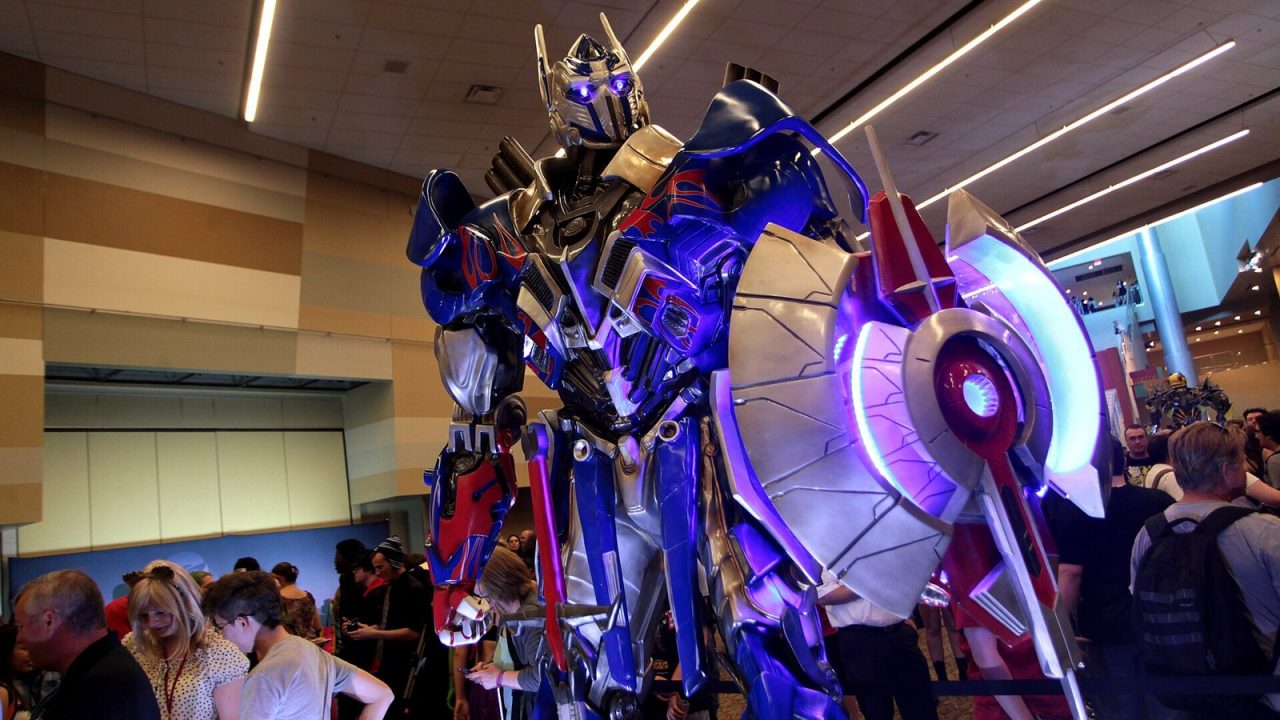
Transformers should be a natural fit for video games: the brand is a toy that turns from one thing into another, and games can do that at the press of a button. Yet the franchise’s track record is uneven: a handful of loved titles, a long tail of rushed movie tie-ins, and a library partly removed from digital stores because of licensing. This history walks through the main eras and explains what happened to the best-remembered games.
The 1980s: Home Computers and Japanese Exclusives
The first Transformers game arrived only a year after the cartoon and toy line launched in the West. The Transformers (1985) was developed by Denton Designs and published by Ocean Software for the ZX Spectrum and Commodore 64. It was a small, side-on action game in which players switched between several Autobots.
Activision released Transformers: The Battle to Save the Earth on the Commodore 64 in 1986, two decades before it became the franchise’s most important publisher.
In Japan, Takara (the toy company that created many of the original moulds) published its own games. Transformers: Mystery of Convoy (1986) for the Famicom is remembered mainly for its punishing difficulty; it later turned up on the Wii Virtual Console in Japan in 2008. Transformers: The Headmasters followed in 1987 on the Famicom Disk System, tied to the Japan-only animated series of the same name. Neither received an official Western release.
The Beast Wars Era and a Quiet Decade
The 1990s were thin. A Super Nintendo game was in development but Takara announced in 1994 that it would not ship on that console, and it never came out in any form. The franchise’s next real appearance was tied to the CGI series Beast Wars, in which the robots transform into animals rather than vehicles.
Beast Wars: Transformers was developed by Sony’s Studio Cambridge and published by Hasbro Interactive for the original PlayStation in 1997, with PC and Mac versions in 1998. It was a third-person shooter with Maximal and Predacon campaigns. A follow-up, Beast Wars Transmetals, appeared in 1999 on PlayStation and Nintendo 64 as a turn-based battle game. Neither became a classic, but they kept the brand on consoles.
Behind the scenes, the rights were moving around. Hasbro sold its digital gaming rights for several properties, Transformers included, to Infogrames (which later traded under the Atari name) in 2000, and then bought them back in 2005. That arrangement explains why the next major Western Transformers game came from Atari rather than Hasbro or Activision. For a general look at how these deals work, see our explainer on how video game licensing works.
Transformers (2004): The Armada Game on PS2
The first Transformers game many Western console players remember fondly is simply called Transformers, released on PlayStation 2 in 2004. It was developed by Atari Melbourne House (later Krome Studios Melbourne) and published by Atari, and it was based on the Transformers: Armada cartoon and toy line, which centred on the small Mini-Cons partnering with bigger robots.
The game is a third-person shooter set mostly on an Earth that looks much more like wild natural landscapes than city streets. Players choose from three Autobots (Optimus Prime, Red Alert and Hot Shot) and collect Mini-Cons that can be equipped for weapons and abilities. Its large levels, long draw distances and towering boss fights, including an enormous Unicron at the end, impressed players at the time, while its difficulty and occasionally awkward controls divided them.
A separate Japanese PS2 game titled Transformers came out in 2003 from Winkysoft and Takara; it is a different product, so be careful with listings if you collect physical copies.
The Activision Era Begins: Movie Tie-Ins (2007 to 2011)
When Michael Bay’s live-action Transformers film arrived in 2007, Activision held the game licence and approached it the way big publishers handled most blockbusters of the period: a game for nearly every platform, released alongside the film.

- Transformers: The Game (2007) was developed by Traveller’s Tales for home consoles, with a PSP version by Savage Entertainment, and released on PS2, PS3, Xbox 360, Wii, PSP and Windows. It offered Autobot and Decepticon campaigns that loosely retold the film in small open areas.
- Transformers: Autobots and Transformers: Decepticons (2007) were two Nintendo DS games by Vicarious Visions, a common trick of the era to sell a game in two versions.
- Transformers: Revenge of the Fallen (2009) was led by Luxoflux, with other studios including Beenox, Krome Studios and Savage Entertainment handling various versions, and again covered most platforms. DS versions came from Vicarious Visions.
- Transformers: Dark of the Moon (2011) was developed by High Moon Studios for PS3 and Xbox 360 and served as a prequel to the third film. Behaviour Interactive made the DS, Wii and 3DS editions.
These games followed the classic tie-in pattern: fixed release dates, multiple studios and versions of uneven quality. Dark of the Moon is generally considered the most solid because High Moon reused the technology it had developed for an original project.
Activision also published games for the animated shows, including Transformers Animated: The Game (2008) on DS and Transformers: Prime – The Game (2012) on Wii, Wii U, DS and 3DS, developed by Nowpro.
High Moon’s Cybertron Games: The Fan Favourites
Transformers: War for Cybertron (2010) was something Activision had not tried before: a Transformers game not tied to any film or cartoon. Developed by High Moon Studios and released in June 2010 for PS3, Xbox 360 and Windows, it is set entirely on Cybertron during the civil war between the Autobots and Decepticons, before the robots ever reach Earth. Megatron hunts Dark Energon; Optimus Prime, not yet the leader he will become, tries to stop him.
The game split its story into a Decepticon campaign and an Autobot campaign, five chapters each, with the Decepticon half taking place first. Each chapter put three robots in the field, and online play let three friends take those roles. Multiplayer included competitive modes and a wave-survival mode called Escalation. Its visual design drew heavily on the original “Generation 1” characters while giving them a heavier, more mechanical look.
Transformers: Fall of Cybertron (August 2012) picked up directly from that story, covering the final days of Cybertron and the Ark’s departure. It replaced the dual-campaign structure with a single cinematic campaign that hopped between characters, each chapter built around a particular ability: Grimlock’s rage, Jazz’s grapple, Cliffjumper’s stealth, Bruticus as a combiner. It is the game most fans name as the best Transformers game ever made, and it was later released on PS4 and Xbox One in 2016.
A third game, Transformers: Rise of the Dark Spark (2014), was developed by Edge of Reality rather than High Moon. It tried to link the Cybertron storyline with the continuity of the fourth film, Age of Extinction, and was received far less warmly. A separate 3DS version came from WayForward.
PlatinumGames’ Devastation (2015)
Activision’s final Transformers game was also one of its most surprising. Transformers: Devastation was developed by PlatinumGames, the Japanese studio behind Bayonetta, and released in October 2015 on PS3, PS4, Xbox 360, Xbox One and Windows.
Devastation is a short, stylish action game that leans fully into Generation 1. The characters are cel-shaded to look like the 1980s cartoon, the cities are bright and blocky, and the cast includes Peter Cullen as Optimus Prime and Frank Welker as Megatron, the voices from the original series. Its combat focused on combos, dodges that slow time, and transforming mid-attack, which made the toy gimmick part of the core mechanics rather than a travel mode.
Critics praised its feel and fan service while noting its brevity and repetitive environments. It remains a cult favourite, and its absence from digital stores has kept physical copies in demand.
Why the Activision Games Disappeared
Activision’s Transformers licence ran out, and in December 2017 its games began disappearing from digital storefronts. Delisting trackers record Devastation, Fall of Cybertron and Rise of the Dark Spark being removed from Steam and PlayStation stores on December 21, 2017, and Steam users reported War for Cybertron vanishing the same day. Xbox versions followed shortly afterwards, with reports of their removal by early January 2018.
Delisting means a game can no longer be bought digitally, though existing owners can generally still download it and physical discs still work. That is why used copies of Fall of Cybertron and Devastation rose in price.
In mid-2024, store pages for three of these games appeared again on the Xbox Store, listed as not available for sale, which prompted speculation about a re-release. At the time of writing no relaunch had been confirmed. Jagex’s online project Transformers Universe, announced in 2013, was a separate casualty; it shut down on January 31, 2015.
After Activision: Mobile and Family Games
Since the licence moved on, Transformers games have generally been smaller in scale and aimed at younger players or mobile audiences.
| Game | Year | Developer | Notes |
|---|---|---|---|
| Angry Birds Transformers | 2014 | Rovio / Exient | Mobile crossover shooter |
| Transformers: Earth Wars | 2016 | Space Ape Games / Backflip Studios | Mobile strategy |
| Transformers: Forged to Fight | 2017 | Kabam | Mobile brawler |
| Transformers: Battlegrounds | 2020 | Coatsink | Turn-based tactics, published by Outright Games |
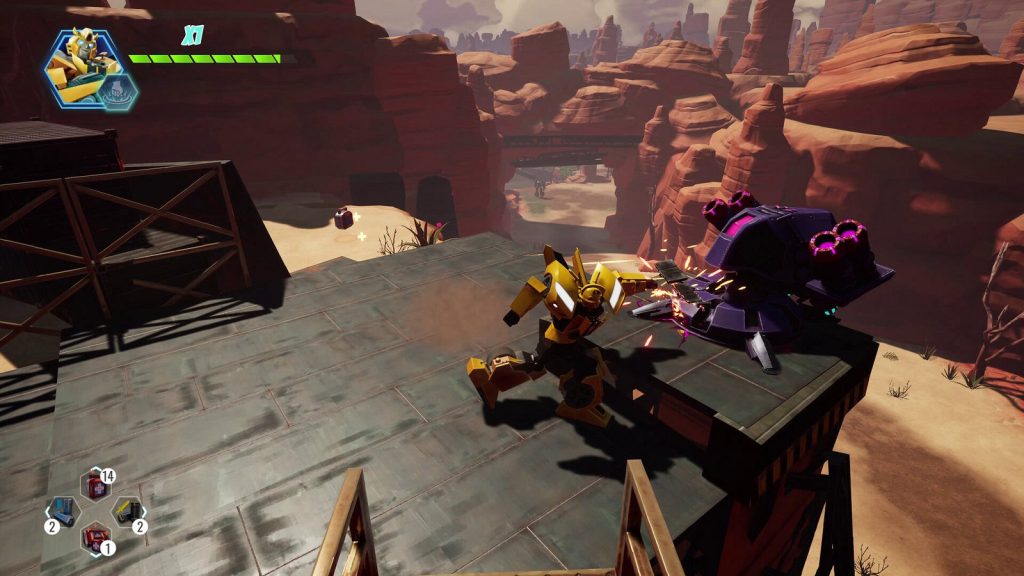
| Transformers: EarthSpark – Expedition | 2023 | Tessera Studios | Action game based on the EarthSpark series |
| Transformers: Galactic Trials | 2024 | 3DClouds | Racing and combat, published by Outright Games |
Outright Games, a publisher that specialises in licensed family titles, has become the most consistent home for the brand on consoles. Sega also made several Transformers arcade shooters, including Transformers: Human Alliance (2013) and Transformers: Shadows Rising (2018).
Not every project made it out. Transformers: Heavy Metal, an augmented reality mobile game from Niantic, was cancelled in June 2022. Transformers: Reactivate, an online action game from Splash Damage revealed with a lot of fan interest, was cancelled in January 2025.
Where to Start Today
Playing the most celebrated Transformers games takes some effort, because the best ones are delisted.
- Fall of Cybertron: the strongest story campaign. Physical copies exist for PS3, Xbox 360, PS4 and Xbox One.
- War for Cybertron: worth playing first if you want the full story, and it adds the dual-faction campaign structure.
- Devastation: the pick for anyone who grew up on the 1980s cartoon or simply enjoys tight action combat.
- Transformers (2004): a PS2-era curiosity with impressive scale, best for collectors and patient players.
- The recent Outright Games titles: currently purchasable and suited to younger fans.
On Xbox, the backward compatibility programme means owned Xbox 360 discs of some older games may still work on newer hardware, but check Microsoft’s official compatibility list for the specific title before buying a used copy.
What the History Tells Us
Transformers games follow a pattern common to licensed gaming. Tie-ins made to match film dates were mostly forgettable, while the best games came when a studio could build its own story: High Moon on Cybertron, PlatinumGames with its cartoon tribute. And because licences are time-limited, even the good ones can vanish from sale, so a well-made licensed game is worth picking up before the contract runs out.