Jurassic Park Video Games: From 1993 to Jurassic World Evolution
From Ocean's 1993 platform games and Trespasser to Telltale and Frontier's Evolution series, a full history of Jurassic Park video games.
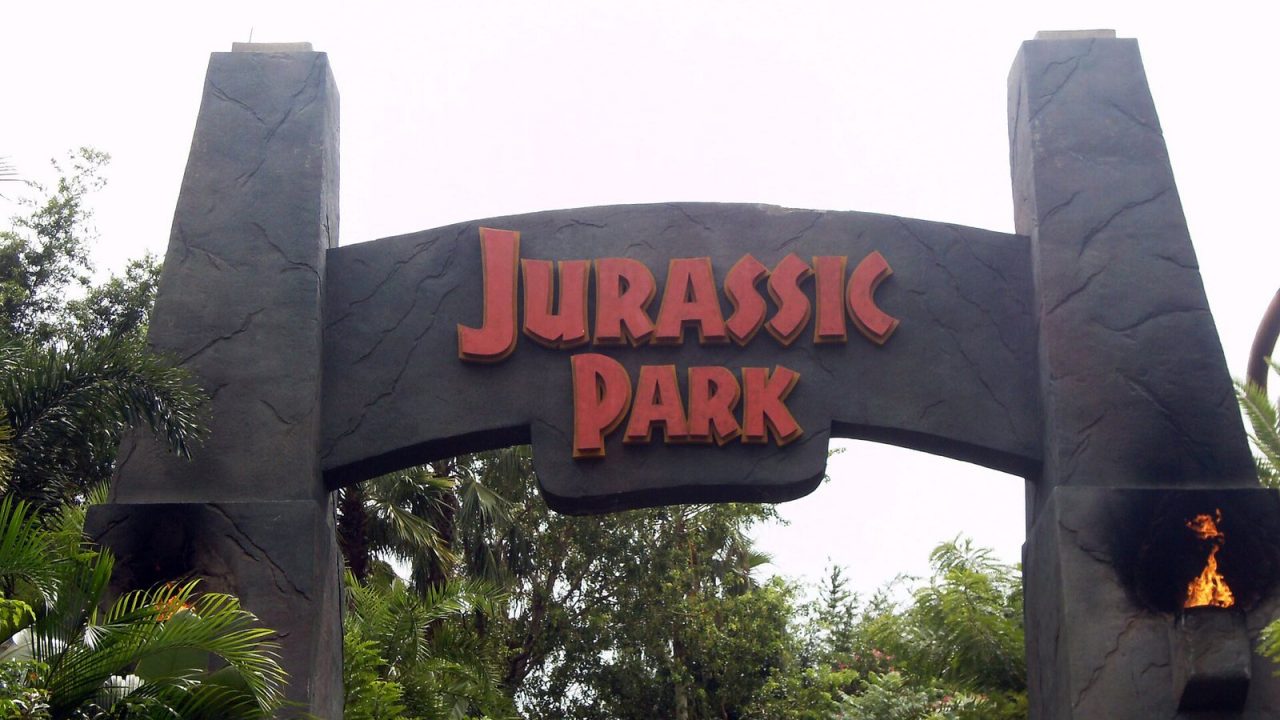
Few films have ever been as obviously suited to video games as Jurassic Park. Steven Spielberg’s 1993 blockbuster offered a ready-made premise: an island, a collapsing security system and animals that want to eat you. Yet the franchise’s gaming history is not a straight line. It runs through a burst of platform-specific tie-ins in 1993, ambitious experiments that did not quite work, years of minor spin-offs and, finally, a management series that turned the park itself into the star. This guide traces that history in order and explains why the games look so different from one era to the next.
1993: One Film, Many Different Games
In the early 1990s, a “Jurassic Park game” did not mean one product ported everywhere. Licences were frequently split by platform, and each version could be a completely different design built by a different team. That is exactly what happened in 1993.
Ocean Software, the British publisher that had already built a business on film licences, held the rights for Nintendo platforms and home computers. Its NES game, released in June 1993, was a top-down action game in which Dr. Alan Grant collects dinosaur eggs and works his way across Isla Nublar; the Game Boy version was a port of that design. Ocean’s Super NES game was more ambitious: the outdoor sections used an isometric view, while entering buildings switched to a first-person perspective, an unusual mix for the console. Ocean also released a version for MS-DOS and the Amiga.
On Sega’s side, the picture was different again. BlueSky Software developed the Sega Genesis game, a side-scrolling action platformer whose big hook was choice: you could play as Grant or as a Velociraptor, with the raptor campaign giving players a rare chance to be the monster. Sega made its own separate side-scrolling game for the Game Gear and Master System, which added driving sections, and a point-and-click adventure for the Sega CD that leaned on the add-on’s storage to present a slower, exploration-focused take on the island.
For a buyer in 1993, then, the “Jurassic Park game” you experienced depended entirely on which console you owned. That fragmentation is one of the clearest examples of how licensing worked before multiplatform engines made a single shared design the norm. For a general look at how these deals are structured, see our explainer on how video game licensing works.
1994: Sequels, Arcades and Full-Motion Video
The film’s success kept the games coming. BlueSky followed its Genesis title with Jurassic Park: Rampage Edition (1994), a faster, more action-heavy sequel in which Grant’s helicopter crashes back on Isla Nublar. Ocean produced Jurassic Park 2: The Chaos Continues for the Super NES and Game Boy, a side-scrolling run-and-gun that told an original story rather than adapting the film.
Sega also brought the licence to arcades in 1994 with a rail shooter built into a cabinet with a moving seat, a showpiece that sold the brand as spectacle rather than story.
The Lost World Era (1997–1999)
When The Lost World: Jurassic Park opened in 1997, the games again split by platform, though this time a new player led the main release. DreamWorks Interactive, the games arm of the studio Spielberg co-founded, developed the PlayStation and Sega Saturn game with Appaloosa Interactive. It was a side-scrolling platformer with several playable characters, including dinosaurs such as a Compsognathus and a T. rex, and it was praised mainly for its visuals and sound. Electronic Arts published the PlayStation version, while Sega handled the Saturn release.
The Genesis received a different, overhead game by Appaloosa, and several handheld versions appeared from different studios. Sega built a Lost World arcade gun game on its Model 3 hardware, which became a long-running fixture in arcades. On PC, DreamWorks Interactive released Chaos Island, a small real-time strategy game.
Trespasser: The Brilliant Failure (1998)
The most famous Jurassic Park game is probably one that most people never finished. Trespasser, developed by DreamWorks Interactive and published by Electronic Arts for Windows, was released in North America on October 27, 1998. It was billed as a digital sequel to The Lost World, set on Isla Sorna (Site B) a year after the film’s events.
Players control Anne, a plane crash survivor voiced by Minnie Driver, while Richard Attenborough voiced John Hammond. The game’s ambitions were huge: a physics engine that governed nearly every object, a single arm that players moved to pick up, throw and swing things, and no conventional HUD. Instead of a health bar, Anne’s condition was shown by a heart-shaped tattoo on her chest that players could look down at.
The reality fell short. A fixed release date, a shift in design direction late in development and unfinished systems left the arm awkward to control and the dinosaurs’ behaviour unconvincing. Reviews were largely negative, and GameSpot named it the worst game of 1998. Yet Trespasser has had an unusual afterlife. It is often credited as one of the first games built around a full physics engine, and Valve’s Gabe Newell has cited it as an influence on the physics of Half-Life 2. Its awkward, simulated arm is also frequently mentioned as a forerunner of deliberately clumsy physics games such as Surgeon Simulator 2013 and Octodad. We cover the game in more detail in a dedicated article later in our schedule.
Jurassic Park III and Operation Genesis (2001–2003)
The third film in 2001 brought mostly small games. Konami published several Game Boy Advance titles, including the isometric action game Island Attack, the platformer The DNA Factor and a management game called Park Builder, plus a light-gun arcade machine.
The standout of this period did not adapt a film at all. Jurassic Park: Operation Genesis, developed by the Australian studio Blue Tongue Entertainment and published by Universal Interactive, launched on Windows in March 2003, with PlayStation 2 and Xbox versions the same month. It finally delivered what many fans had wanted since 1993: the chance to build the park.
Players dug for fossils and amber to extract DNA, hatched dinosaurs, built fences, viewing areas and amenities, and tried to earn a five-star rating while keeping visitors safe. Large carnivores drew crowds but could break loose when stressed, turning the film’s central disaster into a game mechanic. Safari and balloon rides let you tour your own park, and completing the missions unlocked “Site B”, a sandbox island without visitors where dinosaurs could simply live. Reviews were moderately positive, and its reputation grew because nothing replaced it for fifteen years.
Telltale’s Jurassic Park: The Game (2011)
After a quiet stretch, Telltale Games returned the franchise to consoles and PC with Jurassic Park: The Game, released on November 15, 2011 for Windows, OS X, PlayStation 3 and Xbox 360, with an iPad version as well. It was an episodic adventure in four parts, sold as separate downloadable episodes on PC and PS3 and as a single disc on Xbox 360.
The story runs during and after the events of the first film on Isla Nublar. Its cast is mostly new: veterinarian Gerry Harding (a minor character from the film) and his teenage daughter Jess, the mercenary Nima Cruz, who is trying to recover the embryo canister Dennis Nedry lost, and members of a rescue team. The game leans heavily on quick-time events and dialogue choices rather than puzzles, and characters can die during sequences.
Critics were mixed, praising its faithfulness to the film but criticising the limited interaction. In hindsight, it was an early step in Telltale’s shift toward cinematic storytelling.
The Jurassic World Era and the Evolution Series
The 2015 revival film Jurassic World brought a new wave of games. Mobile developer Ludia had already released Jurassic Park Builder (2012) and followed it with Jurassic World: The Game (2015) and the location-based Jurassic World Alive (2018). A LEGO adaptation of the films also arrived in 2015, and a pair of VR games, Jurassic World Aftermath (2020) and its Part 2 continuation, came from Coatsink for Oculus Quest headsets.
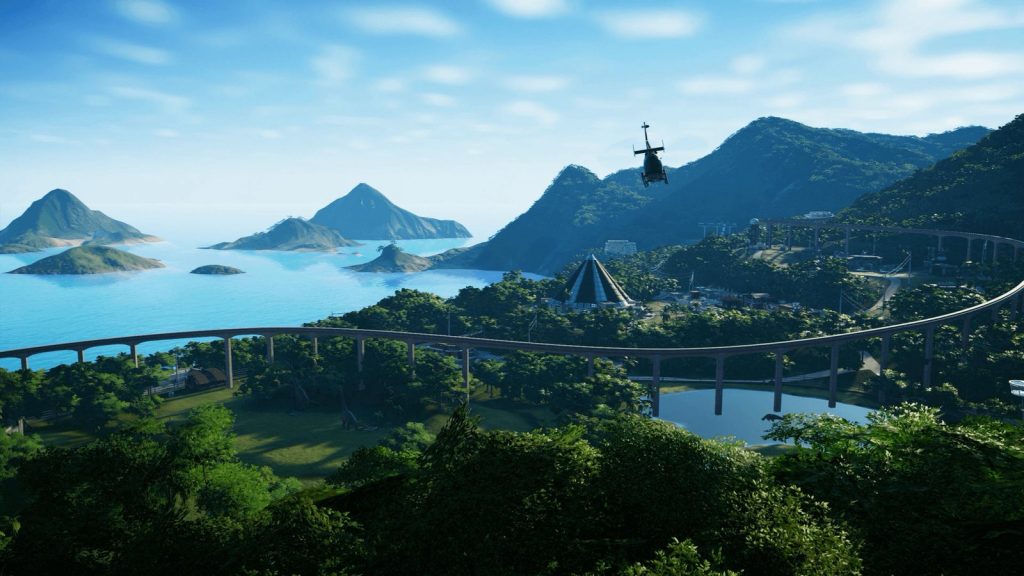
The most important modern series, though, is Frontier Developments’ Jurassic World Evolution. Frontier, known for theme park management games, released the first game on June 12, 2018 for PC, PlayStation 4 and Xbox One, with a Switch edition in 2020. It is, in spirit, a modern successor to Operation Genesis: you build parks across the islands of the Muertes Archipelago, manage science, entertainment and security divisions, and deal with storms and escapes. Jeff Goldblum reprised Ian Malcolm in voice work, and later expansions brought in other film actors.
Jurassic World Evolution 2 followed on November 9, 2021, adding a story campaign set after Jurassic World: Fallen Kingdom, a “Chaos Theory” mode that revisits moments from all the films, and flying and marine reptiles. Jurassic World Evolution 3 launched in October 2025 on PC, PlayStation 5 and Xbox Series X/S. We are not covering management strategy here; the key point is that Frontier made the park, not a character, the protagonist, which turned out to be the most durable formula the franchise has found.
Revivals, Collections and What Comes Next
Interest in the 1990s games has led to official re-releases. Limited Run Games published Jurassic Park: Classic Games Collection in November 2023, bundling several of the 16-bit and handheld titles for modern consoles. Wikipedia’s list of Jurassic Park games records the collection’s digital version as delisted on March 31, 2026, another reminder that licensed games, even re-released ones, are only available as long as the contracts allow.
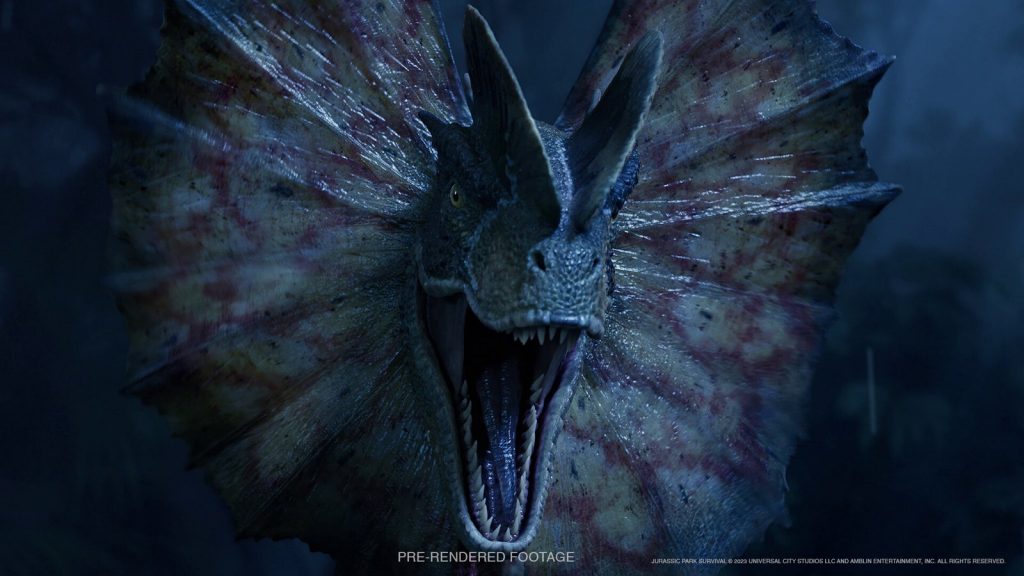
Saber Interactive announced Jurassic Park: Survival at The Game Awards in December 2023 for PlayStation 5, Xbox Series X/S and PC. It is a single-player action-adventure set on Isla Nublar in the aftermath of the first film, in which players control a scientist from InGen trying to survive and escape. As of this writing, check Saber’s official channels for its current release status rather than relying on older trailers or rumours.
Which Jurassic Park Games Are Worth Playing?
Because the library spans so many genres, the best starting point depends on what you want from it.
| If you want… | Try | Why |
|---|---|---|
| To build and run the park | Jurassic World Evolution 2 or 3 | The most complete version of the franchise’s park fantasy, and currently sold on modern platforms |
| Retro action | The Genesis Jurassic Park or Rampage Edition | Fast, playable and the raptor campaign is still a novelty |
| A story set in the film’s world | Jurassic Park: The Game | Recreates the original film’s tone with a new cast |
| Gaming history | Trespasser | Rough to play, but important for physics-driven design |
| A classic management game | Operation Genesis | The template the Evolution series built on |
Collectors should note that many 1993 and 1997 games share a title but differ completely by platform, so always check which console a listing is for.
The Pattern Behind Three Decades of Dinosaurs
The franchise’s gaming history mirrors the broader story of licensed games. In the 1990s, games shipped on film release schedules and split across platforms, which produced a lot of variety and inconsistent quality. Ambitious projects like Trespasser ran into the immovable deadlines that defined the tie-in era. The games that lasted were the ones that found a format suited to the brand rather than to a single film: the park-management loop that Operation Genesis introduced and Frontier expanded. If the Evolution games prove anything, it is that the most compelling character in Jurassic Park has always been the park itself.