Superman Video Games: Why the Man of Steel Is So Hard to Adapt
From Atari's 1979 Superman to Superman 64 and Superman Returns: the history of Man of Steel games and why invulnerability and scale make him so hard to adapt.

Superman was the first superhero to star in a video game, and for more than four decades he has been one of the hardest to get right. Batman has a run of acclaimed games, and Spider-Man has become one of gaming’s biggest stars, yet Superman’s best-known game is one that regularly appears on lists of the worst ever made. The reasons are partly bad luck and difficult development, but mostly they come down to a design problem that no studio has fully solved: how do you challenge a hero who can do almost anything?
This history covers the main Superman games in order, from Atari’s 1979 cartridge through the infamous Superman 64 and EA’s Superman Returns, then looks at why the character remains such a tough fit for games.
Atari’s Superman (1979): The First Superhero Game
The story begins with Superman for the Atari Video Computer System (later known as the Atari 2600), released in September 1979. It was programmed by John Dunn at Atari, which at the time was owned by Warner Communications, the parent company of the studio behind the 1978 Superman film. The game was intended as a tie-in to that film, and it became the first published superhero video game.
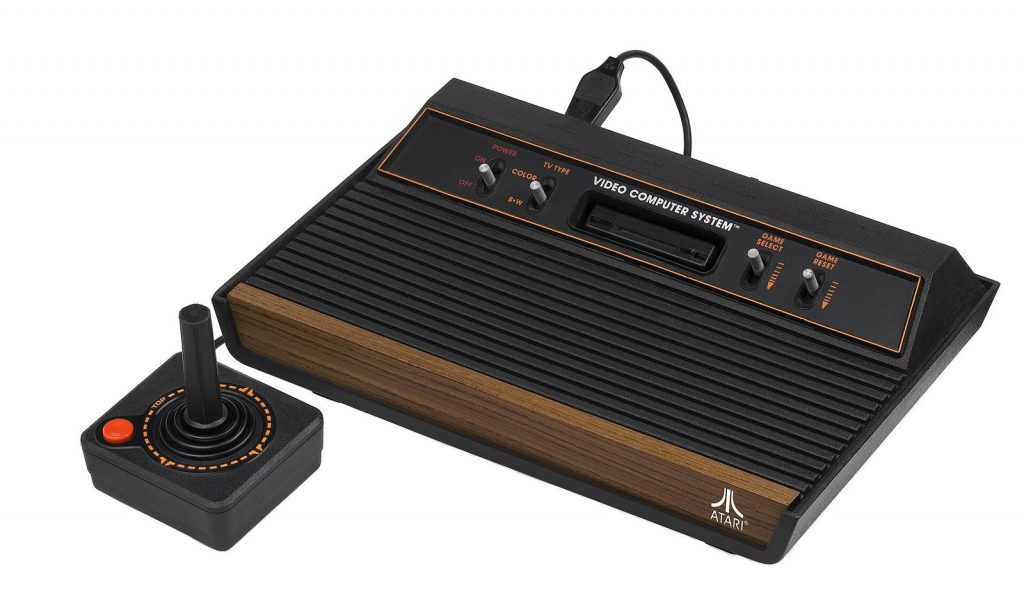
The setup is simple but surprisingly open. Lex Luthor has blown up a bridge in Metropolis. The player, as Clark Kent and Superman, must repair the bridge, capture Luthor and his henchmen, and return to the Daily Planet as Clark in the shortest possible time. Metropolis is spread across multiple screens connected by streets and subway shortcuts. Kryptonite satellites can strip Superman of his flight, and only Lois Lane can restore him. Superman can also use X-ray vision to see what lies on adjacent screens.
The game’s code was built on the prototype of Warren Robinett’s Adventure, and Dunn negotiated for a larger cartridge than usual to fit everything in. Contemporary reviews were positive, and retrospectives often note how open-ended it was for its time. Interestingly, even this first game already faced the core problem: it made Superman vulnerable through kryptonite, and challenged the player through time rather than danger.
The 8-Bit and 16-Bit Years
Through the 1980s and early 1990s, Superman appeared in a steady stream of games across home computers, consoles and arcades. Notable entries included Superman: The Game (1985) for the Commodore 64 and Atari 8-bit computers, a Superman game for the NES (1987), Taito’s Superman arcade game (1988), Superman: The Man of Steel (1989) for several home computers, and Sunsoft’s Superman for the Sega Genesis (1992).
The most fondly remembered of this era is The Death and Return of Superman (1994) for the Super NES and Genesis, a side-scrolling beat ’em up developed by Blizzard Entertainment and published by Sunsoft, based on the famous comic storyline in which Superman is killed by Doomsday and later returns. Its structure lets players control Superman and the four replacement Supermen who appeared in the comics during his absence. It worked largely because it reduced the problem to a familiar genre: Superman simply punched his way through enemies like any brawler hero.
Most games of this period handled Superman’s power the same way: they ignored most of it. Flight became a limited move, his strength a standard attack, and his invulnerability a health bar. That made the games playable, but rarely made players feel like Superman.
Superman 64 (1999): The Infamous One
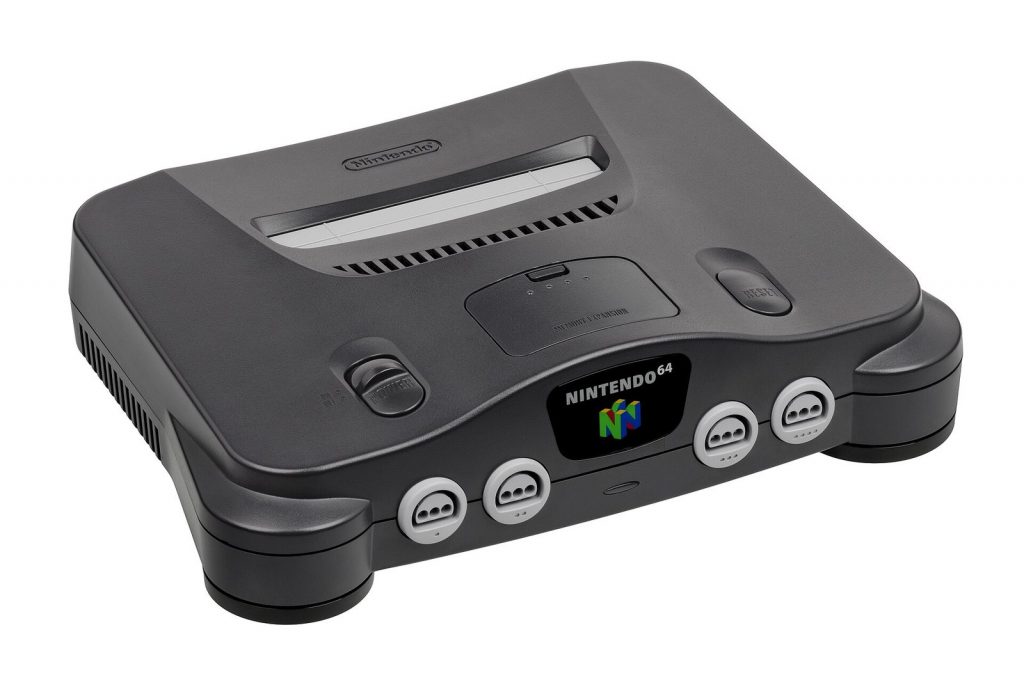
No Superman game is better known than the Nintendo 64’s Superman: The New Superman Adventures, universally called Superman 64. Developed and published by French company Titus Interactive, it was released in North America on May 29, 1999, and based on Superman: The Animated Series. It was the first 3D Superman game.
Rings and fog
The game’s story places Superman in a virtual version of Metropolis created by Lex Luthor. Its most notorious feature is its outdoor stages, which require Superman to fly through series of rings within a time limit. The rings began as tutorial sections but became a central part of the game, and critics felt they were an absurd fit for the character. The other famous element is the green “kryptonite fog” covering the city. In the story it is Luthor’s way of weakening Superman; in practice, it hid the limited draw distance of the hardware.
Development troubles
Superman 64’s problems are well documented. Development started in 1997, and according to accounts from the team, approvals from Warner Bros. and DC Comics slowed progress and restricted what the game could do. The licensors pushed back on ideas, including what Superman could do to people and objects, and at one point favoured a very different concept. Titus’s technical director later called development a disaster from start to finish, and the game’s creator said less than ten percent of the original design made it into the final release.
The result was savaged by critics for its controls, bugs, repetitive missions and fog, with an aggregate score around 23 percent. It still sold more than 500,000 copies, entering the North American top ten in its first month. A planned PlayStation version was rebuilt by another studio but cancelled in 2000 after Titus’s licence expired.
Superman 64 is an extreme example of the licensing pressures that shaped many tie-in games. Our article on how video game licensing works explains the approval process that can make or break such projects.
The 2000s: Apokolips, Xbox and Superman Returns
The early 2000s brought a few more attempts. Superman: Shadow of Apokolips (2002) for PlayStation 2 and GameCube, developed by Infogrames Sheffield House, was again based on the animated series, with cel-shaded visuals and a story involving Darkseid’s forces. It was generally better received than Superman 64. Superman: The Man of Steel (2002) for Xbox, from Circus Freak Studios, was less successful.
Superman Returns (2006)
The most interesting attempt to solve the Superman problem was EA Tiburon’s Superman Returns, released in November 2006 for PlayStation 2, Xbox, Xbox 360 and Nintendo DS alongside the film of the same name. Brandon Routh reprised his role from the film.
EA Tiburon’s answer was to shift vulnerability from Superman to the city. In the main game, Superman cannot be killed. Instead, Metropolis has a health meter, and if the city takes too much damage, the game ends. Superman has a stamina meter for his powers, recharged by absorbing sunlight. The open city was large, and flying at high speed across it was widely praised. Bizarro appears as a major antagonist, and players could also control him in a separate mode.
The idea was sound, but the execution disappointed. Reviews were poor, with Metacritic scores ranging from 33 to 51 depending on platform, and critics complained about repetitive fights and a weak final encounter, with IGN famously noting that the final boss was a tornado. The game still showed a direction others would consider: making Superman’s challenge about protecting people rather than surviving.
The cancelled Blue Steel
After Superman Returns, Factor 5, the studio behind the Rogue Squadron games, worked on a Superman project known as Blue Steel for PlayStation 3, Xbox 360 and Wii. It was cancelled in 2008 when its publisher, Brash Entertainment, shut down. For broader context on Superman’s place in DC’s game history, see our guide to DC video games beyond Batman.
Why Superman Is So Hard to Adapt
Across all these games, a set of recurring problems appears.
Invulnerability
Games depend on risk. If the hero cannot be hurt, combat has no tension. Superman’s invulnerability leaves designers with a short list of options: lean on kryptonite (which becomes repetitive), give him an arbitrary health bar (which undercuts the fantasy), or move the risk elsewhere, as Superman Returns did with the city meter.
Scale and speed
Superman can fly faster than sound and lift enormous weights. Building a world where those abilities feel meaningful requires huge, detailed environments and believable physics for destruction. Superman 64’s fog shows what happens when the hardware cannot keep up. Even in 2006, Superman Returns could deliver the speed, but not enough interesting things to do with it.
Enemies worth fighting
Superman’s rogues gallery has fewer villains who can physically match him than Batman’s or Spider-Man’s has for them. Darkseid, Doomsday, Bizarro and Brainiac work as big threats, but filling a whole game with credible enemies is harder. Many Superman games fall back on robots and generic henchmen, which makes the hero’s strength feel wasted.
Licensor protection
Superman is one of the most valuable characters in DC’s catalogue, and licensors have been careful about how he is portrayed. The Superman 64 accounts show how those restrictions can shape a game. That caution is understandable, but it makes it harder for developers to take bold design risks.
Superman Since Superman Returns
Since 2006, Superman has mostly appeared as part of ensembles rather than in solo games. He has been a playable character in the LEGO DC games and DC’s fighting games, and he is one of the Justice League members the player is sent to take down in Rocksteady’s Suicide Squad: Kill the Justice League (2024), which casts him as a mind-controlled antagonist rather than a hero. For a character of his stature, the long gap since his last big-budget solo game on consoles is itself telling.
| Game | Year | Developer | How it handled Superman’s power |
|---|---|---|---|
| Superman (Atari 2600) | 1979 | Atari (John Dunn) | Kryptonite and a time challenge |
| The Death and Return of Superman | 1994 | Blizzard Entertainment (published by Sunsoft) | Beat ’em up with health bar |
| Superman 64 | 1999 | Titus Interactive | Kryptonite fog, timed ring stages |
| Shadow of Apokolips | 2002 | Infogrames Sheffield House | Action brawler with powers |
| Superman Returns | 2006 | EA Tiburon | City health meter, invulnerable hero |
What a Great Superman Game Might Need
Looking at the history, the most promising ideas are those that redefine success: protecting civilians, preventing disasters, and making decisions about where to be rather than simply surviving fights. Superman Returns came closest to that conceptually, and the Atari original, with its emphasis on rebuilding and returning to the Daily Planet on time, hinted at it more than forty years ago. Whether a future studio can combine that approach with modern technology and a licensor willing to take risks remains one of the open questions in superhero games.