Iron Man and Captain America in Video Games: The Solo Games
A history of the solo Iron Man and Captain America games, from 8-bit computer titles and Sega's movie tie-ins to Iron Man VR and the projects still to come.
Iron Man and Captain America have been in dozens of video games, yet the list where either is the sole lead is surprisingly short. Most appearances are in ensembles: the Avengers, Ultimate Alliance rosters or guest spots. Their solo careers are a patchwork of 1980s computer games, a few handheld titles, a burst of film tie-ins between 2008 and 2011, and one well-regarded virtual reality game.
This guide walks through those solo games in order and looks at why standalone games for the core Avengers became so rare.
The Early Years: Computer Games and Team-Ups
Captain America got a solo game well before Iron Man did. Captain America in: The Doom Tube of Dr. Megalomann was published by Mikro-Gen in 1987 for European home computers including the ZX Spectrum, Commodore 64, Amstrad CPC, Atari ST and Amiga. It was a modest action game sold mostly in the UK and Europe, built more around the novelty of a Marvel license than the character.
The more famous early appearance is Captain America and the Avengers, released by Data East in arcades in October 1991. Despite the title, it is a team game: players choose Captain America, Iron Man, Hawkeye or Vision in a side-scrolling beat ’em up against the Red Skull and a long list of Marvel villains, including Klaw, Whirlwind, the Mandarin, Juggernaut and Ultron. Home versions followed on the Genesis/Mega Drive, Super NES, Game Boy and Game Gear, while the NES received a separate game with the same name that let you play only as Cap and Hawkeye.
Iron Man’s first headline credit was shared, too. Iron Man and X-O Manowar in Heavy Metal (1996, Acclaim) paired him with Valiant Comics’ armored hero in a crossover action game on PlayStation, Saturn, MS-DOS and handhelds, a curious licensing footnote of the mid-1990s comics boom.
The Invincible Iron Man on Game Boy Advance (2002)
Iron Man’s first true solo game arrived on Nintendo’s handheld. The Invincible Iron Man, developed by Torus Games and published by Activision, shipped in North America in December 2002 for the Game Boy Advance. It was one of several small handheld releases under Activision’s broad Marvel license of the time.
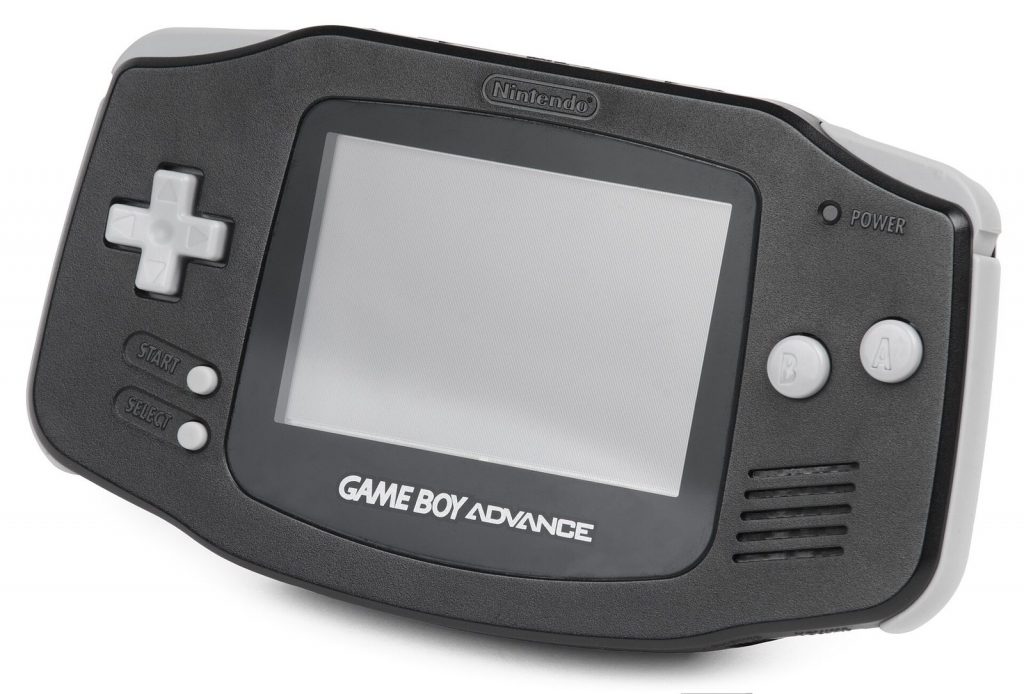
The game is a side-scrolling run-and-gun built around a classic comics premise: Tony Stark’s armor technology has been stolen, and Iron Man has to track it down. Villains drawn from his comics rogues gallery, such as the Crimson Dynamo and Blizzard, stand between him and the stolen tech. It was the first handheld game with Iron Man as a playable lead, and reviews were mixed to positive, with the short length a common criticism. It did not lead to a series, but it set a recurring pattern: Iron Man games focus on armor, technology and Stark weapons in the wrong hands.
Sega and the Marvel Studios Tie-In Era
The real wave of solo games came with Marvel’s own films. Sega signed a deal covering the early Marvel Studios movies, and between 2008 and 2011 it released tie-ins for Iron Man, The Incredible Hulk, Iron Man 2, Thor: God of Thunder and Captain America: Super Soldier. These were classic tie-ins as described in our piece on the rise and fall of the movie tie-in game: locked to a release date, on as many platforms as possible, built by several studios at once.

Iron Man (2008)
Sega released Iron Man on May 2, 2008, the same week the film opened, on PlayStation 3, Xbox 360, Wii, PlayStation 2, PSP and Nintendo DS, with the Windows version following a few days later. The main developer was Artificial Mind and Movement (later known as Behaviour Interactive), with Secret Level working on the PS3 and Xbox 360 versions.
The game loosely follows the film’s origin story and then expands it with comic book villains the movie did not use, including Blacklash, the Controller, Titanium Man and the Melter, before ending against Iron Monger. Robert Downey Jr., Terrence Howard and Shaun Toub reprised their film roles. Missions mixed flying, ground combat and targeting of armored vehicles and installations.
Critics were harsh. The high-definition versions received low scores from outlets such as IGN and Eurogamer, and GameSpot gave the game its tongue-in-cheek “Worst Game Everyone Played” award for 2008. Commercially, however, it did well: Sega reported sales of around 2.6 million copies by March 2009. That gap sums up the tie-in economy: a recognizable film on the box sold copies regardless of quality.
Iron Man 2 (2010)
Iron Man 2 launched in early May 2010 to coincide with the sequel film. Sega Studios San Francisco developed the PS3 and Xbox 360 versions, with High Voltage Software, Griptonite Games and Gameloft handling other platforms. One notable change was the writing: comic writer Matt Fraction, then the author of The Invincible Iron Man comic series, wrote the original story with Sega’s team. Rather than retelling the film, it set up its own plot involving A.I.M., the Crimson Dynamo and the rogue machine Ultimo.
Downey did not voice Iron Man this time; the role went to Eric Loomis. Don Cheadle (War Machine) and Samuel L. Jackson (Nick Fury) did reprise their film roles, and War Machine was playable. It added more flexible armor and weapon customization, but reviewers found it short and repetitive, and the response was mixed at best.
Captain America: Super Soldier (2011)
Captain America’s tie-in was the strongest of the group. Captain America: Super Soldier was released in July 2011 alongside Captain America: The First Avenger, published by Sega and developed primarily by Next Level Games, the Canadian studio better known for Nintendo work. High Voltage Software handled the Wii and later 3DS versions, and Griptonite made the DS game.
Instead of retelling the film, Super Soldier is set during its events in 1944 and sends Cap into Castle Zemo, a Hydra fortress in the Bavarian mountains. Enemies include Arnim Zola, Iron Cross and the Red Skull. Chris Evans, Hayley Atwell, Sebastian Stan, Neal McDonough and other cast members reprised their film roles. The game’s combat, built around counters, acrobatics and shield throws in a single large environment, was compared at the time to Batman: Arkham Asylum. Critics praised that combat while criticizing the story, visuals and reliance on quick-time events, leaving scores in the “mixed” range. A separate mobile game, Captain America: Sentinel of Liberty, was released for iOS and Android.
Mobile Tie-Ins and the Quiet Years
After Super Soldier, Sega’s run of Marvel movie games ended, and the console tie-ins stopped. Instead, Gameloft produced mobile games for several releases, including Iron Man 3: The Official Game (2013), an endless-runner style flying game, and Captain America: The Winter Soldier – The Official Game (2014).
Both heroes remained highly visible, but almost always as part of a team. They appeared in Marvel: Ultimate Alliance and its sequels, in LEGO games, in collectible and mobile titles, and later in Crystal Dynamics’ Marvel’s Avengers (2020), where Iron Man and Captain America were among the launch heroes. For a full overview of how Marvel’s licensing strategy changed in this period, see our history of Marvel video games.
Marvel’s Iron Man VR (2020)
The most interesting solo Iron Man game made flying the armor the central experience. Marvel’s Iron Man VR, developed by Camouflaj and published by Sony Interactive Entertainment, released for PlayStation VR on July 3, 2020, after a delay linked to the COVID-19 pandemic. A Meta Quest version followed on November 3, 2022, published by Oculus Studios.
The game uses one motion controller per hand to represent Iron Man’s repulsors. Pointing your palms backward thrusts you forward, and aiming them at enemies fires, making flight and combat a physical act. The story is set several years after Tony Stark first becomes Iron Man and pits him against Ghost, a hacker seeking revenge for the damage caused by Stark Industries weapons, along with a rogue artificial intelligence called the Gunsmith. The armor design was created with comic artist Adi Granov, whose work influenced the film suits.
Reviews were mixed to positive; critics enjoyed the flight model but criticized long loading times on the original PlayStation VR. It was nominated for Best VR/AR at The Game Awards 2020.
Why Solo Avengers Games Became Rare
Several factors explain why such popular heroes have so few major solo games.
- The end of guaranteed tie-ins. As HD-era budgets rose, it became harder to justify a game that had to hit a specific opening weekend and then left shelves within months.
- Marvel’s partner model. From the mid-2010s, Marvel Games favored fewer, bigger deals with selected studios, each building a specific game around a specific character. That produced high-profile projects, but only a few at a time.
- The ensemble effect. After the films made the Avengers a household name, publishers often preferred a team roster, which lets one game sell to fans of several characters at once.
- Design challenges. Iron Man, a flying ranged hero with an enormous arsenal, is hard to balance in a traditional action game; Captain America, a grounded fighter, is easier to design for but harder to make distinct from other melee heroes.
What Comes Next
Both heroes have announced solo or near-solo projects, neither dated as of October 2026.
In September 2022, Electronic Arts announced that its Motive Studio was developing a single-player, action-adventure Iron Man game with Marvel Games. EA has not given a public release window.
Captain America is co-lead of Marvel 1943: Rise of Hydra, a narrative action game from the studio originally known as Skydance New Media, with Amy Hennig as a writer and producer. Set in occupied Paris during the Second World War, it pairs Steve Rogers with Azzuri, the Black Panther of that era, alongside Howling Commando Gabriel Jones and Wakandan spy Nanali. Plaion signed on as publisher in 2024. The game was originally targeted at late 2025, later moved to early 2026, then delayed again; in June 2026 it was announced that it would not arrive before 2027.
Quick Reference: The Solo Games
| Game | Year | Hero | Developer / Publisher |
|---|---|---|---|
| Captain America in: The Doom Tube of Dr. Megalomann | 1987 | Captain America | Mikro-Gen |
| The Invincible Iron Man | 2002 | Iron Man | Torus Games / Activision |
| Iron Man | 2008 | Iron Man | Artificial Mind and Movement, Secret Level / Sega |
| Iron Man 2 | 2010 | Iron Man | Sega Studios San Francisco and others / Sega |
| Captain America: Super Soldier | 2011 | Captain America | Next Level Games and others / Sega |
| Iron Man 3: The Official Game | 2013 | Iron Man | Gameloft (mobile) |
| Captain America: The Winter Soldier – The Official Game | 2014 | Captain America | Gameloft (mobile) |
| Marvel’s Iron Man VR | 2020 | Iron Man | Camouflaj / Sony (PS VR), Oculus Studios (Quest) |
Which Ones Are Worth Seeking Out?
Availability matters as much as quality. The Sega tie-ins were never re-released, so playing them means tracking down physical copies for consoles such as the PlayStation 3 and Xbox 360; Captain America: Super Soldier is usually considered the best of the three, mainly for its combat. Iron Man VR is the most distinctive and easiest to recommend if you own a compatible headset. The Data East arcade game remains a fun piece of 1990s Marvel history, even though Cap shares the spotlight.
These heroes have been well served by team games and poorly served by solo ones; the Motive and Rise of Hydra projects may change that.