Knights of the Old Republic: The Story and Era Explained
The Old Republic era of KOTOR and KOTOR II explained: Revan, Malak, the Mandalorian Wars, the Sith Triumvirate and the era's lasting influence on Star Wars.
Spoiler warning: this article discusses the major twists of both Knights of the Old Republic games.
Few Star Wars stories outside the films have had the impact of Star Wars: Knights of the Old Republic. BioWare’s 2003 game moved the franchise thousands of years into the past, created one of its most famous characters in Darth Revan and delivered a twist that players still discuss. Its sequel, Obsidian’s Knights of the Old Republic II: The Sith Lords, went darker and stranger, questioning the Force itself. This guide explains the era the games are set in, the backstory they share, the plot of each game, and how their ideas echoed through later Star Wars stories. It focuses on lore and narrative rather than gameplay or character builds.
The Games at a Glance
| Knights of the Old Republic | KOTOR II: The Sith Lords | |
|---|---|---|
| Developer | BioWare | Obsidian Entertainment |
| Publisher | LucasArts | LucasArts |
| First release | Xbox, July 16, 2003 (North America); PC in November 2003 | Xbox, December 6, 2004 (North America); PC in February 2005 |
| Key creators | Director Casey Hudson, lead designer James Ohlen, writer Drew Karpyshyn | Lead designer Chris Avellone |
| Setting | About 4,000 years before the films | Five years after the first game |
Both games are part of Star Wars Legends, the label Lucasfilm applied in 2014 to stories created before the reboot of the official canon. Our explainer on Star Wars canon vs Legends in games covers what that means. KOTOR has since been re-released on Mac, iOS, Android and, in November 2021, Nintendo Switch; KOTOR II followed on Switch in June 2022.
What Is the Old Republic Era?
The “Old Republic” refers to the Galactic Republic in its ancient history, long before the prequel trilogy. In the KOTOR games, it is a galaxy in which the Republic, the Jedi Order and the Sith already exist, but technology, politics and Force traditions look subtly different. Lightsabers, blasters and hyperdrives are familiar, yet planets like Taris, Dantooine and Korriban have histories that the films only hint at.
Setting the games so far back was a deliberate creative choice. It freed BioWare from the film characters, so Luke Skywalker and Darth Vader could not appear and the writers could invent a new cast and new conflicts. It also meant that the player’s choices, including falling to the dark side, would not contradict the movies. If you want to see where the era sits relative to the rest of the franchise, our guide to Star Wars games in chronological order places it on the timeline.
The era already had some groundwork. Dark Horse’s Tales of the Jedi comics, beginning in 1993, had explored the ancient history of the Jedi and Sith, and KOTOR built on that interest while telling a story set much later.
The Backstory: Mandalorian Wars and Two Fallen Jedi
Both games revolve around events that happened before the first game begins. In the Mandalorian Wars, Mandalorian warriors invaded the Republic. The Jedi Council hesitated, but two Jedi, Revan and his friend Malak, defied it and led Republic forces against the Mandalorians, winning the war.
Instead of returning as heroes, Revan and Malak disappeared into the Unknown Regions. They came back at the head of a Sith armada, now calling themselves Darth Revan and Darth Malak, and attacked the very Republic they had saved. Why the heroes fell, and what they found in the Unknown Regions, is one of the central mysteries of the games.
Eventually the Jedi set an ambush, and Revan was apparently killed. Malak, his former apprentice, became Dark Lord of the Sith and continued the war with a fleet whose ships seemed to have no end.
Knights of the Old Republic: The Story
Taris
The player awakens aboard the Republic cruiser Endar Spire as Malak’s forces attack it over the planet Taris. With the pilot Carth Onasi, the player escapes to Taris and searches for Bastila Shan, a young Jedi with a rare ability called Battle Meditation, which can turn the tide of fleet battles. Malak wants her badly. After rescuing Bastila and gathering companions including the Twi’lek teenager Mission Vao, the Wookiee Zaalbar and the Mandalorian veteran Canderous Ordo, the group escapes on the Ebon Hawk as Malak’s fleet bombards Taris.
The Star Maps
On Dantooine, the Jedi Council agrees to train the player, despite misgivings. In ruins near the enclave, the player finds a Star Map, part of a set of ancient devices pointing to the Star Forge, which appears to be the source of Malak’s endless fleet. The search for the remaining maps takes the party to Manaan, Tatooine, Kashyyyk and Korriban, the ancient Sith world. Along the way the crew grows to include the Jedi Juhani, the assassin droid HK-47 and the old hermit Jolee Bindo.
The twist
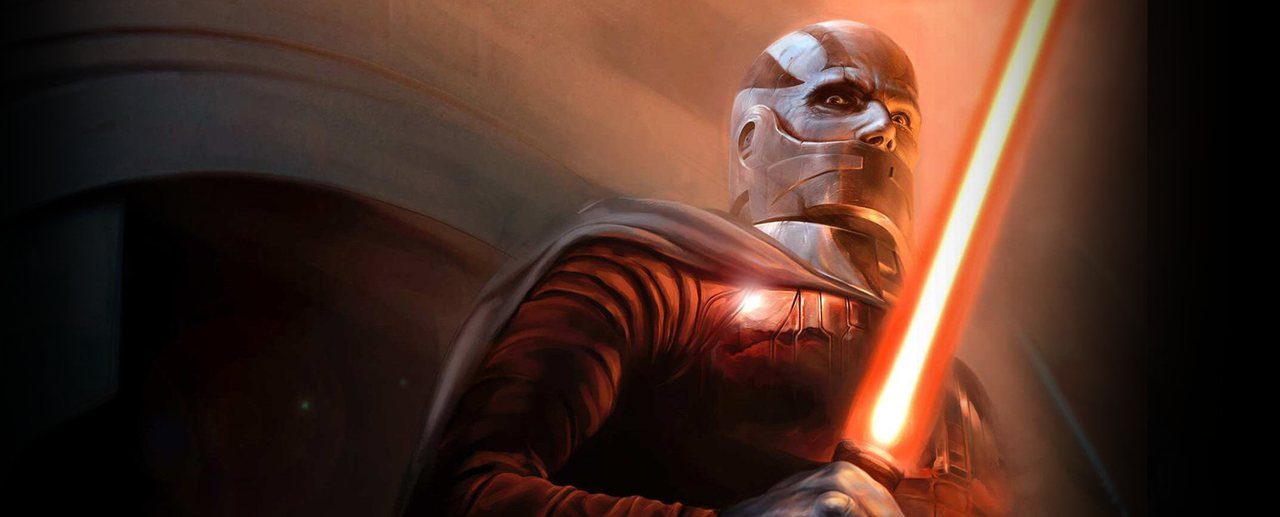
After finding the maps, the party is captured and taken aboard Malak’s flagship. There, Malak reveals the truth: the player is Revan. Revan had not died in the ambush. Gravely wounded, Revan was saved by the Jedi, who erased their memories and built a new identity, hoping that the bond between Revan and Bastila would lead the Jedi to the Star Forge. Bastila sacrifices herself so the player can escape, and Malak turns her to the dark side.
The Star Forge and the endings
The trail leads to an uncharted world home to the Rakata, the ancient species that built the Star Forge, a vast factory that draws power from a star and amplifies the dark side. The ending depends on the path the player has chosen. A light-side Revan defeats Malak, either redeems or defeats Bastila, and destroys the Star Forge, becoming a hero of the Republic. A dark-side Revan allies with Bastila, kills Malak and takes the Star Forge, reclaiming the title of Dark Lord of the Sith.
KOTOR II: The Sith Lords
A darker sequel
Obsidian took over the sequel after BioWare declined LucasArts’ tight production schedule. Set five years after the first game, it shows a galaxy in ruins. The Jedi Order has been all but wiped out by a hidden Sith campaign, and the Republic is exhausted.
The Exile
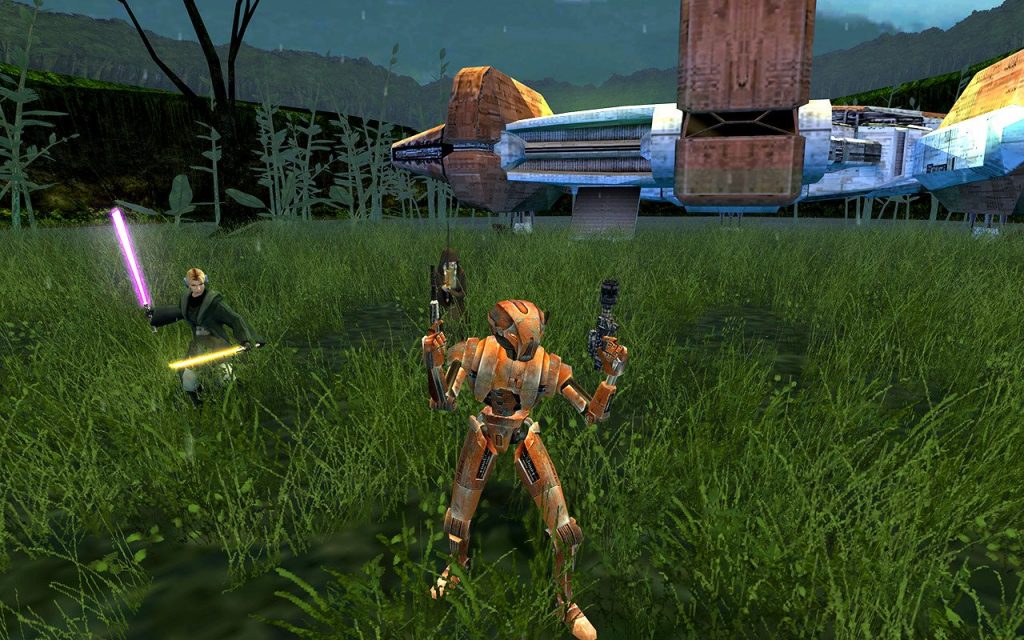
The player is the Jedi Exile, a former Jedi who had followed Revan into the Mandalorian Wars. At the final battle of that war at Malachor V, a superweapon killed enormous numbers on both sides, and the Exile was cut off from the Force by the trauma. Exiled by the Jedi Council, they now begin to reconnect with the Force, starting from a remote mining facility on Peragus.
Kreia and the Sith Triumvirate
The Exile’s guide is Kreia, an old woman who becomes their mentor and constantly challenges simple ideas of good and evil. The antagonists are three Sith Lords known as the Sith Triumvirate: Darth Sion, a lord who holds his broken body together through pain and hatred; Darth Nihilus, a being consumed by a hunger that drains life from entire worlds; and Darth Traya, a fallen master whose identity is one of the game’s revelations, as she is Kreia herself.
The Exile travels to Telos, Dantooine, Nar Shaddaa, Onderon and other worlds, seeking the surviving Jedi Masters and confronting the Triumvirate. The journey ends at Malachor V, where the war began. With a light-side alignment, the Exile defeats Traya, destroys Malachor V and sets out to find Revan; a dark-side Exile takes Traya’s place as the new Dark Lord.
Ideas and themes
KOTOR II is remembered for questioning the Force, the Jedi and the Sith rather than celebrating them. Kreia argues that reliance on the Force makes people weak and that the Jedi’s certainty causes as much harm as the Sith’s cruelty. Critics praised its morally grey writing; Kreia was named GameSpy’s best character of 2005.
Unfinished business
The sequel was made on a schedule of roughly 14 to 16 months, and Avellone later described the released game as unfinished. Whole sections, including a droid planet called M4-78, were cut. A fan project, The Sith Lords Restored Content Modification, later fixed hundreds of bugs and restored much of the cut material on PC. Aspyr announced the restored content as free DLC for the Switch version but cancelled it in June 2023.
Key Characters at a Glance
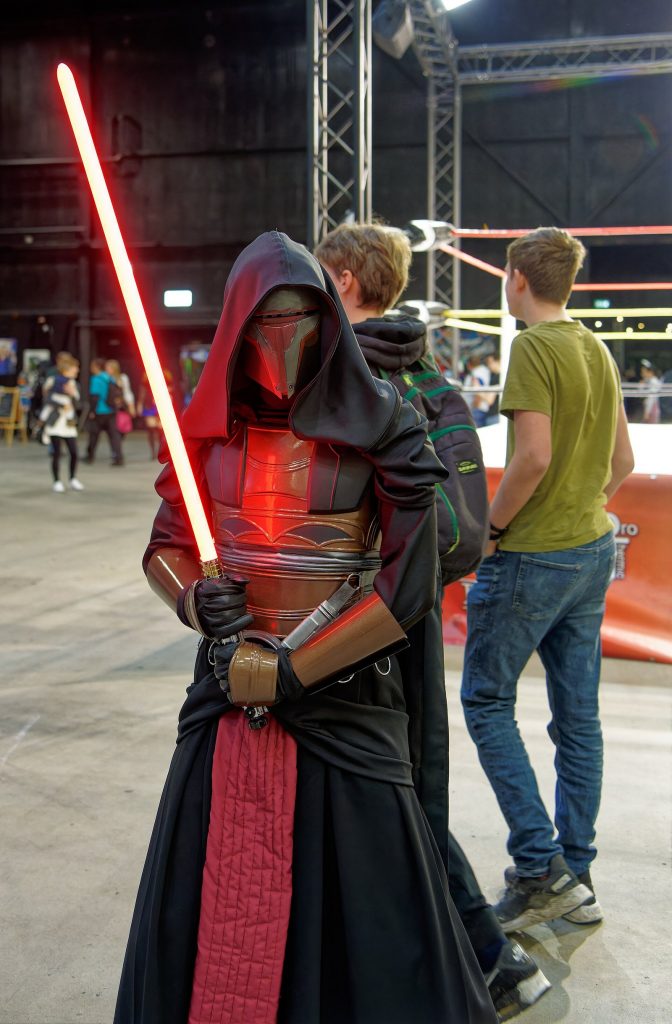
- Revan: war hero, Sith lord and, in KOTOR, the amnesiac player character.
- Malak: Revan’s former friend and apprentice, Dark Lord in the first game.
- Bastila Shan: Jedi with Battle Meditation, bound to Revan through the Force.
- The Exile: KOTOR II’s protagonist, cut off from the Force at Malachor V.
- Kreia / Darth Traya: mentor, manipulator and final antagonist of KOTOR II.
- Darth Sion and Darth Nihilus: the other two members of the Sith Triumvirate.
- HK-47: an assassin droid whose sardonic dialogue made him a fan favourite in both games.
How the Era Shaped Later Star Wars
KOTOR’s influence is visible in several directions.
More games set in the era. BioWare returned to the Old Republic with an online game set about 300 years after the KOTOR games. A planned KOTOR III was cancelled around 2006, but some of its ideas were reused there.
Comics and novels. Dark Horse published a Knights of the Old Republic comic series from 2006 to 2010, set a few years before the first game, and novels expanded on Revan’s story.
Echoes in canon. Even after the 2014 Legends rebrand, names and places from the era resurfaced. Malachor, the world where KOTOR II ends, appears as an ancient Sith site in the animated series Star Wars Rebels, an example of how canon borrows from Legends without adopting its stories wholesale.
A template for Star Wars storytelling. The idea of a morally flexible protagonist and a story told far from the Skywalkers paved the way for later games and series that explore other corners of the galaxy.
Remakes and Successors
A remake of the first game was announced in September 2021 as a PlayStation 5 timed exclusive, with Aspyr as developer. Reports in 2022 said the project had been delayed and moved to Saber Interactive, and no release date has been confirmed at the time of writing. In December 2025, Lucasfilm Games announced Fate of the Old Republic from Arcanaut Studios, a team led by original KOTOR director Casey Hudson, described as a spiritual successor rather than a direct sequel.
For players who have never tried the originals, the first KOTOR remains one of the most recommended entry points into Star Wars gaming, which is why it appears in our list of the best Star Wars games for new players. Play it before reading too much about it: the twist still works best when you do not see it coming.