Star Wars Jedi: Fallen Order and Survivor Explained
A spoiler-light guide to Respawn's Cal Kestis games: timeline placement, main characters, how the planets work, what Survivor changed and what comes next.
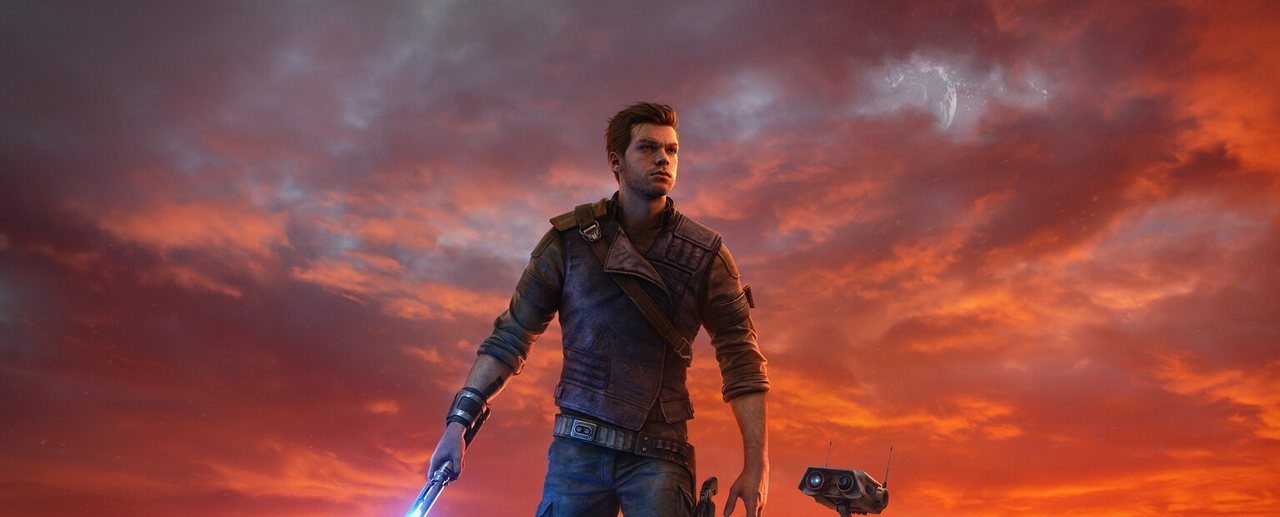
Few modern Star Wars games have done as much to define the franchise’s current gaming identity as Respawn Entertainment’s Star Wars Jedi series. Across two games, players follow Cal Kestis, a young Jedi who survived the fall of his Order, as he tries to stay alive and rebuild something worth believing in while the Empire tightens its grip on the galaxy.
This guide explains where the games sit in the timeline, who the main characters are, how the games are structured and how Survivor builds on Fallen Order. It avoids major plot spoilers: you will learn the setup of each story, not how it ends.
The Games at a Glance
| Game | Release | Original platforms | Setting |
|---|---|---|---|
| Star Wars Jedi: Fallen Order | November 15, 2019 | PlayStation 4, Xbox One, PC | Five years after Order 66 |
| Star Wars Jedi: Survivor | April 28, 2023 | PlayStation 5, Xbox Series X|S, PC | Five years after Fallen Order |
Both games were developed by Respawn Entertainment, the studio known for Titanfall and Apex Legends, and published by Electronic Arts under its Star Wars licence. Fallen Order later received enhanced versions for PlayStation 5 and Xbox Series X|S in 2021. Survivor was released on newer hardware first and arrived on PlayStation 4 and Xbox One on September 17, 2024. Both games are part of official Star Wars canon.
Where the Series Sits in the Star Wars Timeline
The Jedi series takes place during the dark years between Revenge of the Sith and A New Hope. At the end of the prequel trilogy, Palpatine issues Order 66, commanding clone troopers to kill their Jedi officers. Most Jedi die; the few survivors go into hiding as the newly declared Empire hunts them down.
Fallen Order begins five years after Order 66, roughly 14 years before the Battle of Yavin in Star Wars dating. Survivor takes place five years later, about 9 years before the Battle of Yavin. That places both games in the same era as the Obi-Wan Kenobi series and the early seasons of Andor and Star Wars Rebels. In this period there is no organised Rebel Alliance yet, only scattered cells and individuals resisting the Empire. For a wider view of how these games fit with others in the franchise, see our guide to Star Wars games in chronological story order.
Why this era works for a Jedi story
Setting a Jedi game during the Purge solves a storytelling problem. Players get to wield a lightsaber and the Force, but the stakes stay personal: Cal is not a legendary general, he is a hunted survivor. The era also explains why Jedi are rare in the original trilogy, and the Empire’s Inquisitors give the games a natural set of antagonists.
Main Characters
Cal Kestis
Cal was a Padawan when Order 66 struck, and his master died protecting him. In Fallen Order, he has spent five years working as a scrapper in a shipbreaking yard on the planet Bracca, suppressing his Force abilities to avoid detection. He is played by Cameron Monaghan, who provided both voice and performance capture.
BD-1
A small, expressive explorer droid that rides on Cal’s shoulder. BD-1 is central to exploration, scanning the environment, unlocking doors and storing data. He quickly became one of the series’ most popular characters.
The Mantis crew
- Cere Junda – A former Jedi Knight who cut herself off from the Force after a traumatic past. She recruits Cal in the first game.
- Greez Dritus – The four-armed Latero pilot of the Mantis, the crew’s ship and mobile home.
- Merrin – A Nightsister from Dathomir with her own form of magic, introduced partway through the first game.
The Inquisitors and the Empire
The main antagonists of Fallen Order are the Second Sister and the Ninth Sister, Inquisitors tasked with hunting surviving Jedi. Darth Vader makes a memorable appearance. Survivor introduces new adversaries, including Rayvis, a leader of the Bedlam Raiders, while the Empire and its Inquisitors remain a constant threat.
New faces in Survivor
The sequel adds several important characters, including Bode Akuna, a fellow fugitive and ally; Dagan Gera, a Jedi from the High Republic era linked to the history of the planet Koboh; and a cast of locals at Pyloon’s Saloon who give Cal a sense of community.
How the Games Are Structured
Both games are third-person action-adventures that borrow from two well-known design traditions.
Metroidvania-style exploration
Each planet is a large, interconnected space with locked doors, unreachable ledges and hidden paths. As Cal regains or learns abilities such as Force Push, Force Pull and wall running, and as BD-1 gains new tools, previously blocked areas become accessible. Revisiting planets with new abilities is part of the fun. The holographic map shows which paths you cannot yet use, which helps reduce frustration.
In Fallen Order, the five major explorable planets are Bogano, Zeffo, Kashyyyk, Dathomir and Ilum, with the story also taking Cal to Bracca at the start and to the Inquisitors’ fortress on Nur. The Mantis lets you return to planets you have already visited to explore areas you could not reach before.
Deliberate lightsaber combat
Combat is more measured than in many action games. Blocking, parrying and dodging at the right moment matter, and enemies hit hard. Meditation points act as checkpoints where Cal can rest and spend skill points, but resting also respawns most enemies. If Cal is defeated, he loses unspent experience and must strike the enemy who defeated him to regain it. Players familiar with “souls-like” games will recognise these ideas, though the Jedi games are more approachable.
Difficulty options
Both games offer several difficulty levels, from a story-focused setting to a punishing one, and the level can be changed at any time. That makes the series welcoming to newcomers who mainly want the narrative.
How Survivor Builds on Fallen Order
Survivor keeps the core ideas but expands nearly all of them.
- More lightsaber stances. Fallen Order offered single-blade and double-bladed styles plus a split mode. Survivor has five stances: single, double-bladed, dual-wield, a blaster stance that combines a lightsaber with a pistol, and a heavy crossguard stance. Players equip two at a time.
- Bigger, more open areas. Koboh in particular is far larger than any planet in the first game, with optional zones, side activities and mounts.
- A hub and community. Pyloon’s Saloon grows as Cal recruits characters, adding vendors, side stories and a sense of home.
- More customisation. Cal’s appearance, lightsaber, BD-1 and blaster can be customised more extensively.
- Fast travel. Unlike the first game, Survivor allows fast travel between meditation points, making exploration less tedious.
Narratively, Survivor finds Cal older and more battle-worn, working with a cell of resistance fighters on Coruscant before events lead him to Koboh and a mystery from the High Republic era. It explores how long a person can keep fighting a war that seems impossible to win, and what they are willing to sacrifice to keep their friends safe.
Launch issues
Survivor launched with notable performance problems, especially on PC, which Respawn addressed through patches in the following months. Those issues are largely behind it today, but they were a major talking point at release.
Do You Need to Play Fallen Order First?
Yes, ideally. Survivor offers a short recap, but it assumes you know the Mantis crew and the relationships formed in the first game. Its biggest emotional moments depend on that history. Fallen Order is also simpler mechanically, which makes it a gentler introduction to the combat system. If you are choosing a first Star Wars game in general, Fallen Order is one of our top picks in the best Star Wars games for new players.
Connections to the Wider Star Wars Story
The games link to other canon material in several ways. Saw Gerrera, the extremist rebel leader seen in Rogue One and Andor, appears in Fallen Order. Darth Vader’s presence ties the story to the films. Dagan Gera and Koboh’s history connect Survivor to the High Republic, a period explored in Star Wars books and comics since 2021. Merrin’s Nightsister heritage links to Dathomir, familiar from The Clone Wars animated series.
Characters from the games have also reached other media; the novel Star Wars Jedi: Battle Scars (2023), by Sam Maggs, is set between the two games and follows Cal and the Mantis crew.
What Is Known About the Series’ Future
Respawn and EA have confirmed that a third game is in development. In 2024, EA executives publicly stated that the next Jedi game was in production, and Cameron Monaghan had said in 2023 that the team was working on a third installment. As of October 2026, however, EA and Respawn had not officially announced a title, platforms or release date. Insider reports about release timing have circulated, but they remain unconfirmed, so treat them with caution until an official reveal.
Frequently Asked Questions
How long are the games?
Both are substantial single-player adventures. Survivor is longer, especially if you explore Koboh’s optional areas.
Are the games canon?
Yes. Both were developed with Lucasfilm and are part of the official continuity.
Is there multiplayer?
No. Both games are single-player only.
Is Cal Kestis related to any film character?
No. Cal is an original character created for the games. His story runs parallel to the films rather than through them, which is why he does not appear in the original trilogy.
Can I play Fallen Order on newer consoles?
Yes. Native PlayStation 5 and Xbox Series X|S versions were released on June 11, 2021, and were offered free to owners of the PlayStation 4 or Xbox One versions on the same console family.
Do I need to know Star Wars to enjoy them?
No. The games explain the Jedi Purge and their own characters clearly, though knowing Revenge of the Sith adds context to the opening scenes.