Marvel Video Games: A History from the 1980s to Today
Four decades of Marvel games: early computer titles, the arcade boom, Activision's long run, film tie-ins and Marvel Games' studio partnerships.
Marvel characters have appeared in video games since the early 1980s, and few licences have produced so many games across so many genres. The history falls into fairly clear eras: early experiments on home consoles and computers, an arcade golden age, a long period dominated by Activision and movie tie-ins, and a modern era in which Marvel Games hand-picks studios for individual projects.
This article traces that history at a high level, naming the key games and companies in each period. Spider-Man, whose games deserve their own history, gets only a brief mention here, as do the many Marvel fighting games. Dates and statuses are current as of October 2026.
The Early Years: 1982–1989
The first game featuring a Marvel hero was Spider-Man (1982) for the Atari 2600, published by Parker Brothers, a simple climbing game. Marvel licensing in this period was scattered across many small deals with different companies.
One of the most distinctive early projects was the Questprobe series of text adventures from Adventure International, the company of adventure-game pioneer Scott Adams. Questprobe featuring The Hulk (1984) was the first, with further entries featuring other heroes. The series was planned as a long run but ended early when the publisher ran into financial difficulties.
Throughout the late 1980s, Marvel heroes appeared in a variety of home computer and console games of mixed quality. Characters such as the X-Men, Captain America and the Hulk were licensed project by project, with little coordination between games.
The Arcade and 16-Bit Era: 1990s
The early 1990s were a high point for Marvel in arcades, where side-scrolling beat-’em-ups were at their peak.
- Captain America and the Avengers (1991), from Data East, let up to four players control Captain America, Iron Man, Hawkeye and Vision against the Red Skull.
- X-Men (1992), from Konami, is one of the most famous licensed arcade games ever made. Large versions of the cabinet supported six players at once on two screens, letting friends play as Cyclops, Wolverine, Storm, Colossus, Nightcrawler and Dazzler against Magneto.
- The Punisher (1993), from Capcom, a two-player beat-’em-up teaming the Punisher with Nick Fury.
Capcom then began its long relationship with Marvel fighting games, starting with X-Men: Children of the Atom (1994) and Marvel Super Heroes (1995), which eventually led to the Marvel vs. Capcom series. That lineage is a story of its own.
On home consoles, the 16-bit generation brought numerous X-Men, Spider-Man and other titles from publishers such as Sega, Capcom and Acclaim. Licences remained fragmented, and quality varied enormously.
Marvel’s business troubles
The late 1990s were difficult for Marvel as a company. Marvel Entertainment Group filed for bankruptcy protection in 1996 and later emerged as Marvel Enterprises. The financial turmoil helped explain why its licences were handled piecemeal during this period.
The Activision and Movie Tie-In Era: 2000s
Two changes reshaped Marvel games in the 2000s. First, Marvel films became major blockbusters, starting with X-Men (2000). Second, Activision became Marvel’s most important game partner, publishing a steady stream of titles through the decade.
Activision’s flagship games
- X-Men Legends (2004) and X-Men Legends II: Rise of Apocalypse (2005), developed by Raven Software, were team-based action role-playing games where players controlled squads of mutants.
- Marvel: Ultimate Alliance (2006), also by Raven, expanded that formula to the wider Marvel universe, with a large roster facing Doctor Doom and his Masters of Evil.
- Marvel: Ultimate Alliance 2 (2009), developed by Vicarious Visions, adapted the Civil War comic storyline.
- X-Men Origins: Wolverine (2009), Raven’s tie-in to the film, became known for being stronger than the movie it adapted.
- Deadpool (2013), developed by High Moon Studios, was a comedic action game that leaned heavily on the character’s fourth-wall breaking.
Activision also published film tie-ins for the Fantastic Four and X-Men films, among others.
The Legends and Ultimate Alliance games deserve special credit. Their top-down, four-hero format, in which players swapped between characters and combined their powers, let fans assemble dream teams years before the Avengers reached cinemas together. Raven Software built on its experience with earlier action role-playing games, and the result was one of the most fondly remembered Marvel formulas, later revived by Team Ninja for Nintendo.
Other publishers in the 2000s
Activision did not hold every Marvel character. Vivendi Universal Games published Radical Entertainment’s Hulk (2003) and the acclaimed The Incredible Hulk: Ultimate Destruction (2005), an open-city destruction game. Sega published games tied to the early Marvel Cinematic Universe films: Iron Man (2008), The Incredible Hulk (2008), Iron Man 2 (2010), Thor: God of Thunder (2011) and Captain America: Super Soldier (2011).
Most of these movie games had to ship alongside their films, which meant tight schedules, and reviews were often lukewarm. The pattern was common across the industry at the time.
Disney, Marvel Games and a New Strategy
In March 2009, Marvel established Marvel Games, a division to oversee video games based on its characters. Later that year, Disney agreed to acquire Marvel Entertainment, completing the purchase at the end of 2009. The Activision relationship continued for several more years, but Marvel’s approach to games began to change.
The change accelerated after Jay Ong joined Marvel Games in 2014 to lead it. Under his direction, the division moved away from short-schedule film tie-ins and toward fewer, more carefully chosen partnerships, giving developers more creative freedom and favouring original stories rather than retellings of film plots. Disney’s broader decision in 2016 to end its internal console game development and focus on licensing reinforced this model. Our explainer on how video game licensing works covers the general mechanics behind such partnerships.
Delisted classics
A side effect of the end of the Activision era is that many of its Marvel games became hard to buy. When licences lapsed, games such as the Ultimate Alliance titles and Deadpool were removed from digital stores, though some later returned in re-releases.
The Partnership Era: 2015 to Today
The new approach produced a varied set of games, each made by a studio chosen for its specialty.
| Year | Game | Developer | Publisher |
|---|---|---|---|
| 2019 | Marvel Ultimate Alliance 3: The Black Order | Team Ninja | Nintendo |
| 2020 | Marvel’s Avengers | Crystal Dynamics | Square Enix |
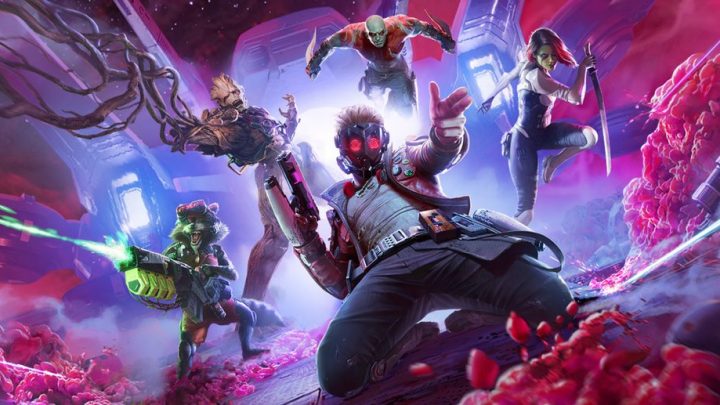
| 2021 | Marvel’s Guardians of the Galaxy | Eidos-Montréal | Square Enix |
| 2022 | Marvel’s Midnight Suns | Firaxis Games | 2K |
| 2026 | Marvel’s Wolverine | Insomniac Games | Sony Interactive Entertainment |
The era’s best-known success came from Insomniac Games and Sony in 2018, which showed what a carefully supported Marvel game could achieve, but it was only one of several distinctive projects.
- Marvel Ultimate Alliance 3: The Black Order (2019) revived Raven’s team formula as a Nintendo Switch exclusive, with a large roster chasing the Infinity Stones against Thanos’s Black Order.
- Marvel’s Avengers (2020) was an ambitious live-service game with a campaign centred on Kamala Khan. It struggled to retain players, and support ended in 2023, when it was removed from sale on September 30.
- Marvel’s Guardians of the Galaxy (2021) took the opposite approach: a single-player, story-driven game with its own take on the team.
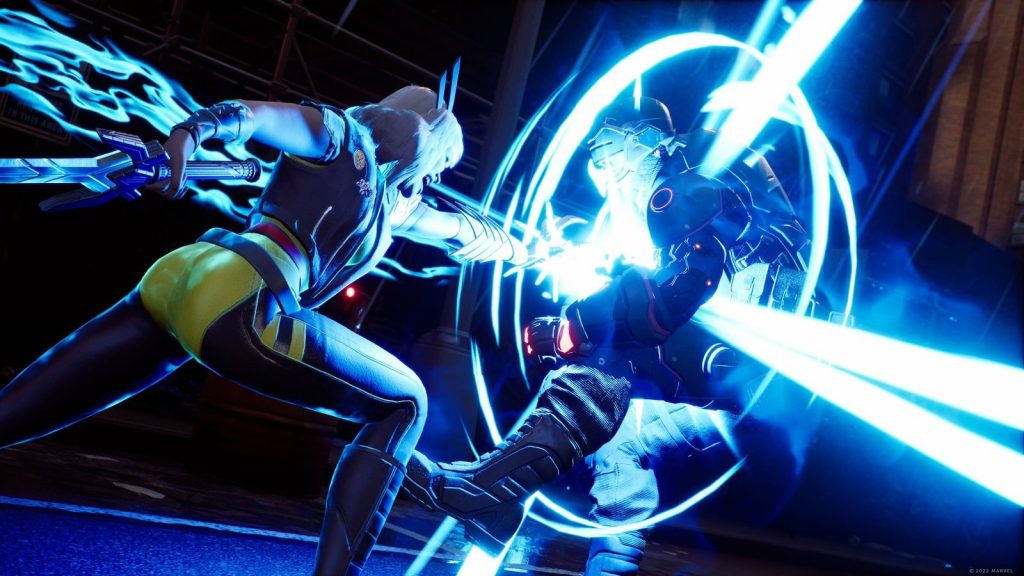
- Marvel’s Midnight Suns (2022) was a tactical game built around magic-focused heroes and card-based abilities.
- Marvel’s Wolverine, Insomniac’s second big Marvel project for PlayStation 5, was released on September 15, 2026.
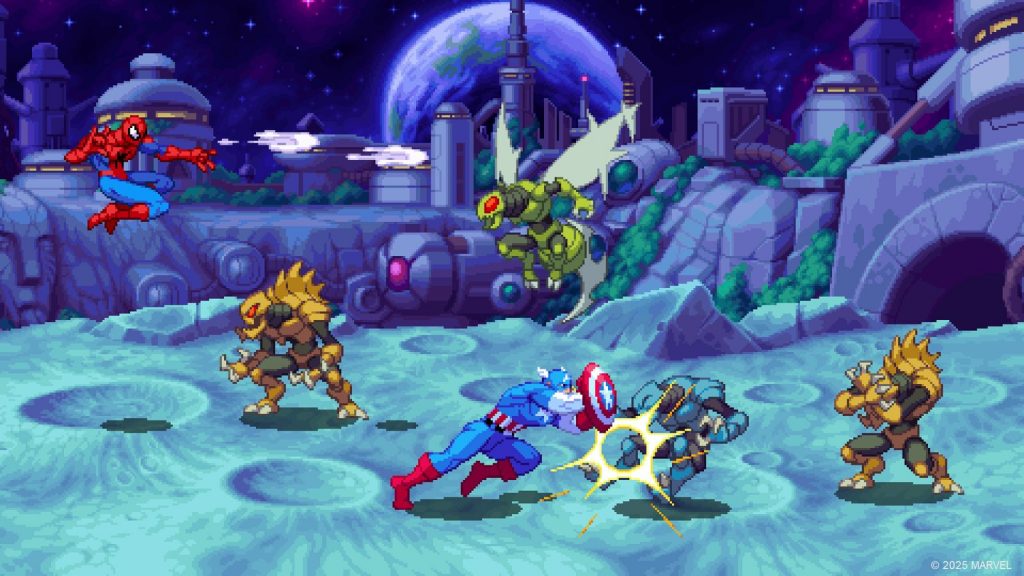
Marvel also appears in other popular genres in this period, including the team-based shooter Marvel Rivals from NetEase and the digital card game Marvel Snap from Second Dinner, as well as smaller retro-styled projects such as Marvel Cosmic Invasion (2025).
Wolverine’s arrival in 2026 also illustrates how long modern Marvel projects take. The game was announced in September 2021 at a PlayStation Showcase, and its exact release date was only confirmed in February 2026, almost five years later. That timescale is typical for large single-player games today and very different from the film tie-in era, when a game might be built in the time it took to shoot and edit a movie.
Games still in development
Several major Marvel games announced in recent years had not been released as of October 2026, including Marvel 1943: Rise of Hydra (a Captain America and Black Panther story set in World War II), EA Motive’s Iron Man and Arkane Lyon’s Marvel’s Blade. Release windows for unreleased games change often, so check official announcements.
What Changed Across Four Decades
- From scattered licences to curated partners. Early Marvel games came from many unconnected deals; modern ones are coordinated by Marvel Games and matched to studios.
- From film tie-ins to original stories. Since the mid-2010s, major Marvel games have usually told their own stories rather than adapting films.
- From team games to solo stars, and back. The 1990s and 2000s favoured ensemble games; the partnership era has produced both solo hero games and team games.
Common misconceptions
- “Marvel games are part of the MCU.” Almost none are. Modern Marvel games are usually set in their own continuities.
- “Disney makes Marvel games.” Disney and Marvel Games approve and guide projects, but outside studios and publishers build and sell them.
Where to Start With Marvel Games Today
Because of delistings and old hardware, the easiest Marvel games to play are mostly from the partnership era. A few starting points by taste:
- Story-driven adventure: Marvel’s Guardians of the Galaxy offers a self-contained, character-focused campaign.
- Team action: Marvel Ultimate Alliance 3 carries on the X-Men Legends tradition with friends on one console.
- Tactics: Marvel’s Midnight Suns suits players who prefer planning to reflexes, and it leans heavily on relationships between heroes.
- Retro arcade spirit: Marvel Cosmic Invasion channels the side-scrolling beat-’em-ups of the 1990s for modern platforms.
The arcade classics and Activision-era games are rewarding for history-minded players, but availability depends on re-releases and original hardware, so check current storefronts before planning a playthrough.