Star Wars: The Force Unleashed Games Explained
Starkiller's story across The Force Unleashed and its 2010 sequel, where both sit between the trilogies, the physics tech behind them and their Legends status.
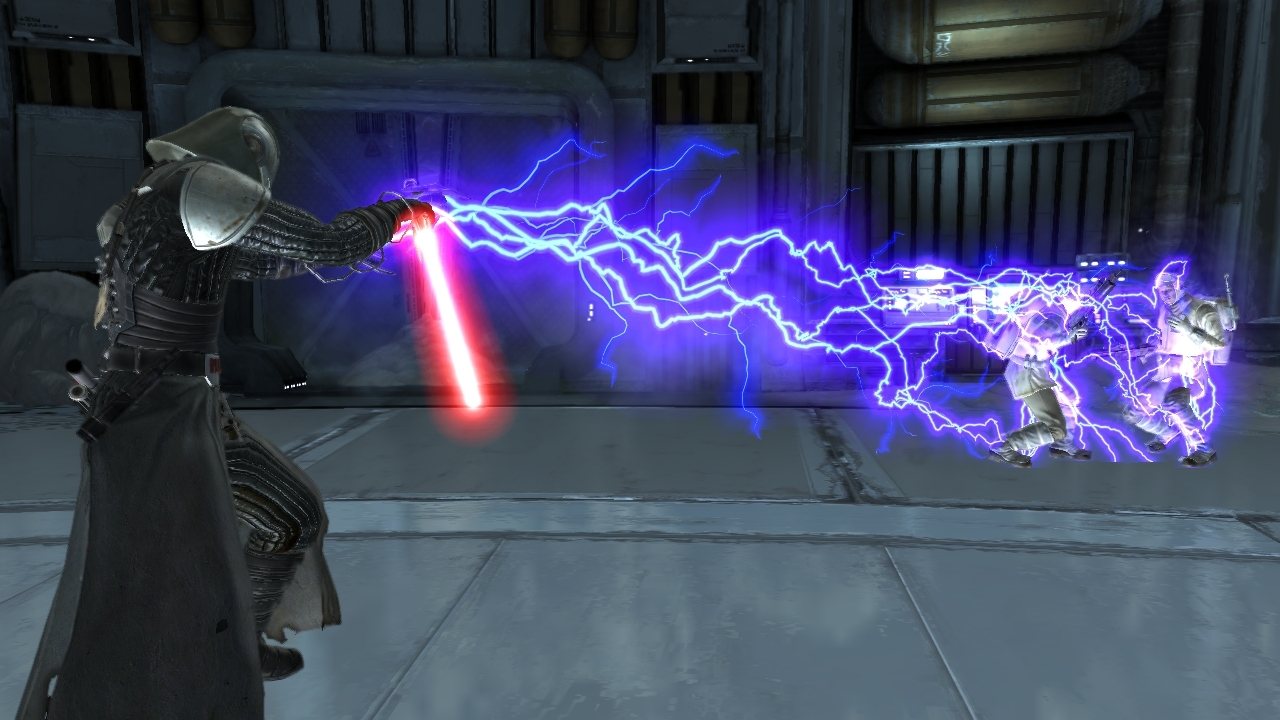
When Star Wars: The Force Unleashed arrived in September 2008, LucasArts pitched it as more than a licensed action game. It was meant to fill the gap between Revenge of the Sith and A New Hope with a story Lucasfilm treated as important, and to show off physics technology that made the Force feel like a physical power. The series left behind a much-debated protagonist, a cancelled third game and an unusual place in Star Wars history.
This guide covers the story, timeline placement, technology, platform versions and Legends status of both games. Spoilers, including the endings, follow.
What The Force Unleashed Is
The Force Unleashed is a third-person action game developed by LucasArts and released in North America on September 16, 2008, with Europe following on September 19. As the title suggests, it puts Force powers, not lightsaber combat, at the centre. You push stormtroopers through walls, pull TIE fighters out of the sky, throw crates, choke enemies and chain lightning between groups of troopers.
The player character is Darth Vader’s secret apprentice, codenamed Starkiller, whose real name is Galen Marek. Sam Witwer provided his voice and likeness, years before voicing Maul in the animated series.
The project was large by LucasArts standards and launched alongside a novelization and a comic adaptation, a sign that Lucasfilm wanted it to feel like a genuine chapter of the saga.
Starkiller’s Story in The Force Unleashed
The game opens with Vader on Kashyyyk killing the Jedi Kento Marek and discovering his Force-strong young son, whom he secretly raises as a hidden apprentice instead of handing him to the Emperor.
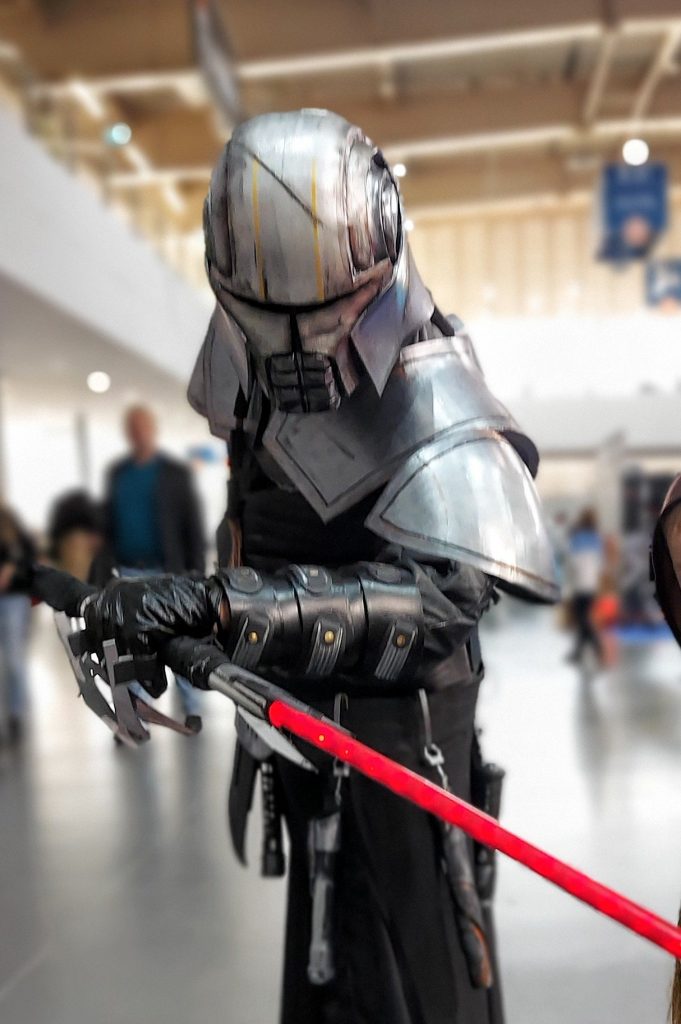
Years later, the adult Starkiller hunts Jedi who survived Order 66: Rahm Kota, a general fighting the Empire with his own militia; Kazdan Paratus, who has built a junk replica of the Jedi Temple on Raxus Prime; and Shaak Ti, a Jedi Master from the prequel era. Aboard his ship, the Rogue Shadow, travel Juno Eclipse, an Imperial pilot assigned to him, and PROXY, a hologram-projecting training droid programmed to try to kill him.
Midway through, Vader is discovered by the Emperor, appears to betray Starkiller, and then gives him a new mission: gather the Emperor’s enemies into a rebellion Vader can use to overthrow Palpatine. Starkiller frees Kota, contacts dissident senators and brings Bail Organa, Mon Mothma and Garm Bel Iblis together on Corellia.
The trap is that Vader still serves the Emperor. He arrests the senators the moment they commit to rebellion, revealing that Starkiller was used to flush out the Empire’s enemies. The final act takes place on the partly built Death Star.
The two endings
The game ends with a choice. In the light side ending, which became the accepted version of events, Starkiller fights Vader, then confronts the Emperor and sacrifices himself so Kota and the senators can escape. The survivors go on to found the Rebel Alliance, and Leia suggests using the Marek family crest as its symbol, a nod to the starbird emblem seen in the films.
In the dark side ending, Starkiller kills Vader, but the Emperor turns on him and he is rebuilt in armour to serve Palpatine, a “what if” the sequel does not follow.
The Force Unleashed II: The Clone Story
The Force Unleashed II was released on October 26, 2010 in North America, again developed by LucasArts for PlayStation 3 and Xbox 360. It follows the first game’s light side ending, in which Starkiller died, and answers that with cloning. Vader is attempting to create a perfect apprentice on Kamino, and the game’s protagonist is one of these clones, troubled by memories of Juno and unsure whether he is Starkiller or simply a copy.
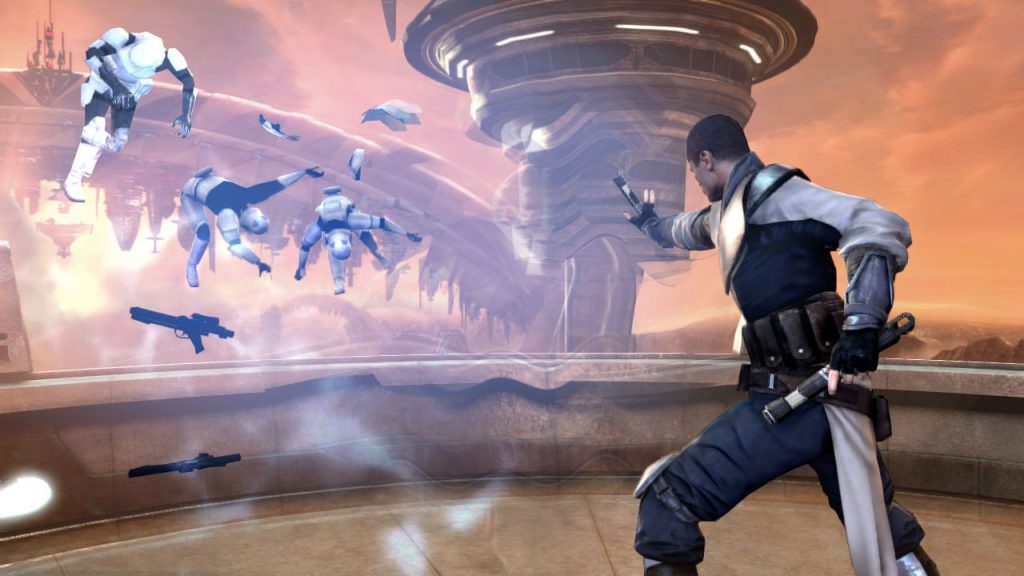
Escaping Kamino, the clone searches for Juno, now with the Rebellion. He rescues Rahm Kota on Cato Neimoidia, meets Yoda on Dagobah and is pursued by Boba Fett, hired by Vader to capture Juno, before a final confrontation on Kamino.
Again there are two endings. In the light side version the clone spares Vader, who is taken prisoner by the Rebellion. In the dark side version the clone kills Vader and is then killed himself, and a darker clone takes his place. A December 2010 downloadable mission takes the dark side thread into an alternate Return of the Jedi scenario on Endor, explicitly non-canonical even by the standards of the time.
Why the sequel felt short
Critics praised the sequel’s visuals and sound but criticised repetitive combat, a thinner story and, above all, a campaign many said could be finished in a single evening. The light side cliffhanger, with Vader captured, was clearly setting up a third game.
Where the Games Sit in the Star Wars Timeline
Both games are set between Revenge of the Sith and A New Hope. The first game’s Kashyyyk prologue takes place not long after Order 66, while its main story happens shortly before A New Hope, with the Death Star still under construction. The sequel follows soon after.
That placement matters because the first game explains the Rebel Alliance’s formation as a specific founding moment on Corellia, triggered by Vader’s scheme. Our guide to Star Wars games in chronological story order puts them alongside the rest of the Imperial-era titles.
| Game | Original release | Main developer | Timeline placement |
|---|---|---|---|
| The Force Unleashed | September 2008 | LucasArts (PS3/360) | Prologue after Order 66; main story shortly before A New Hope |
| The Force Unleashed II | October 2010 | LucasArts (PS3/360) | Shortly after the first game, before A New Hope |
The Technology: Euphoria, DMM and Havok
The first game’s marketing leaned heavily on technology. The PlayStation 3 and Xbox 360 versions ran on LucasArts’ in-house engine, called Ronin, and combined three pieces of third-party middleware:
- Havok handled rigid-body physics, the standard collisions and movement of objects being thrown around.
- Digital Molecular Matter (DMM), from Pixelux Entertainment, simulated how materials behave when stressed. Wood could splinter, metal could bend and glass could shatter according to material properties rather than pre-made animations.
- Euphoria, from NaturalMotion, drove character behaviour. Instead of canned animations, thrown stormtroopers would grab at ledges or reach for nearby allies.
The combination was ambitious for 2008, and Euphoria made Force Push feel reactive: a trooper hurled toward a railing might try to catch himself. DMM was computationally expensive, though, so it was used only on specific objects, and players quickly learned which doors and panels would bend.
The Wii version used Krome Studios’ own physics engine instead, one reason it plays and looks noticeably different.
Platform Versions and Re-Releases
The Force Unleashed was released on an unusually wide range of hardware in 2008, and several versions were effectively separate games built around the same story.
- PlayStation 3 and Xbox 360: the lead version by LucasArts, with the full physics technology.
- Wii, PlayStation 2 and PSP: developed by Krome Studios. The Wii version added motion controls for lightsaber swings and Force powers, and included a duel mode. The PSP version added extra historical missions.
- Nintendo DS: developed by n-Space, with touch-screen Force controls.
- Mobile (iOS, J2ME and N-Gage): smaller versions by Universomo, published by THQ Wireless.
The Ultimate Sith Edition followed in November 2009, bundling the downloadable content. Its best-known addition is a set of “what if” missions, including one that drops Starkiller into the events of A New Hope on Tatooine and a dark side continuation set on Hoth. A Windows port by Aspyr was released in North America on November 6, 2009, and a Mac version followed in 2010.
In April 2022 Aspyr released a Nintendo Switch version based on the Wii edition, keeping motion control options and including the Jedi Temple content. The Xbox 360 versions of both games are also playable on later Xbox consoles through backward compatibility.
Reception and Sales
The first game sold extremely well. According to figures reported at the time and collected on its Wikipedia page, it sold over a million copies in its debut month and passed seven million copies across platforms by early 2010, making it the fastest-selling Star Wars game up to that point. Reviews were mixed: the story, voice cast and Force powers were praised, while the camera, boss fights and repetitive levels drew criticism.
The sequel sold more modestly and reviewed worse. Together, the two games are remembered as a strong concept with uneven execution.
Legends Status and the Cancelled Third Game
In April 2014, after Disney’s acquisition of Lucasfilm, the existing Expanded Universe was rebranded as Star Wars Legends. The Force Unleashed and its sequel became Legends along with the novels, comics and other games of the era. Our explainer on Star Wars canon vs Legends covers that decision in detail.
The current canon tells a different story about how the Rebellion formed. The animated series Star Wars Rebels, the film Rogue One and the series Andor show the Rebel Alliance emerging gradually from scattered cells, financiers and political networks, with figures like Mon Mothma and Luthen Rael doing the slow work that Starkiller accomplishes in a single dramatic arc. Starkiller himself does not exist in current canon.
A third game was considered but never made. LucasArts was shut down as a developer in April 2013, shortly after the Disney acquisition, and the project went with it. Haden Blackman, the first game’s project lead, later described ideas including a more open structure and Starkiller and Vader teaming up against the Emperor, but none progressed beyond early planning.
How The Force Unleashed Fits Into Star Wars Gaming History
Before The Force Unleashed, the most celebrated Force-user games were the Jedi Knight series and Knights of the Old Republic, which treated the Force as one tool among many. Our history of Dark Forces and Jedi Knight shows how those games built up lightsaber and Force combat over a decade. The Force Unleashed instead turned the power level all the way up, making the player close to unstoppable.
Disney-era games took a different approach. Respawn’s Jedi: Fallen Order and Jedi: Survivor also follow a Force user hunted by the Empire after Order 66, but make the protagonist more vulnerable, favouring deliberate combat and exploration over mass destruction; Fallen Order is often described as the more grounded heir to the same premise.
Common misunderstandings
- Starkiller is not related to the Starkiller Base in The Force Awakens. Both borrowed the name independently from an early Star Wars script draft in which Luke’s surname was Starkiller.
- Galen Marek is not Galen Erso. The scientist father of Jyn Erso in Rogue One shares only a first name with Starkiller.
- The PS2 and Wii versions are not downgraded copies of the HD game. They were developed separately by Krome, with their own level structure and features.
Should You Play Them Today?
The first game is the one to play: its story is more complete, its Kashyyyk opening as Vader remains memorable, and the Force powers still feel distinctive. The sequel is mainly for players who want to see the cliffhanger resolved, and it is a short follow-up rather than a full second chapter.
Go in knowing that this is a Legends story, an alternate account of the years before A New Hope best enjoyed on its own terms rather than measured against the current canon.