
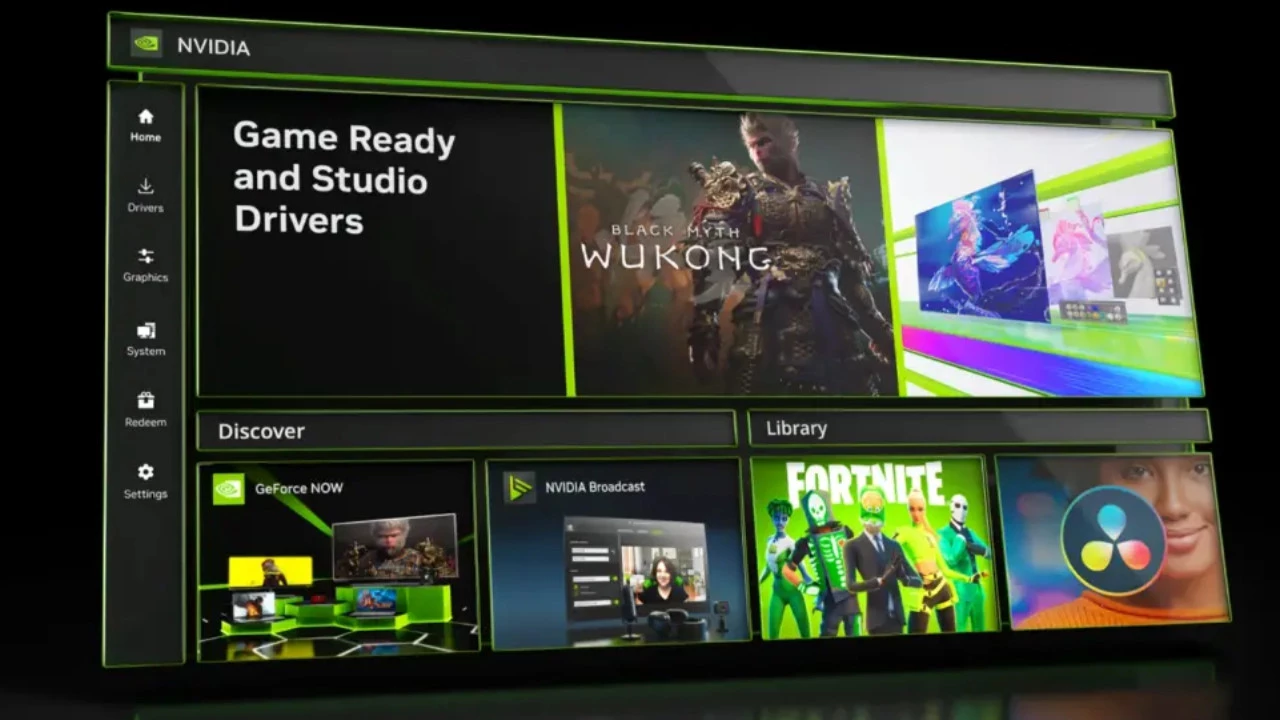
NVIDIA has rolled out a significant update to its flagship software application, bringing version 11.0.8 to users worldwide. The headline feature of this latest release is the introduction of ultra-high frame rate recording capabilities for the company’s popular ShadowPlay gameplay capture function. For the first time, owners of RTX 40 and RTX 50 series graphics cards can now record their gaming sessions at an impressive 240 frames per second, opening new possibilities for content creators and gaming enthusiasts who demand the smoothest possible footage.
This advancement represents a major leap forward in gameplay recording technology, effectively quadrupling the standard 60 FPS recording option that has been the industry norm for years. The ability to capture footage at 240 FPS is particularly valuable for competitive gaming content, where slow-motion replays can reveal split-second decisions and precise mechanical execution that would otherwise be invisible to viewers. Professional esports analysts and content creators have long sought this capability to better showcase high-level gameplay.
ShadowPlay Evolution and Technical Requirements
ShadowPlay has been a cornerstone feature of NVIDIA’s software ecosystem since its introduction in 2013 as part of the GeForce Experience application. Originally designed to provide gamers with an easy way to capture and share their gaming moments, the technology has evolved significantly over the past decade. The feature utilizes the dedicated NVENC hardware encoder built into NVIDIA graphics cards, allowing for efficient video encoding with minimal performance impact on gameplay. This hardware-accelerated approach means that even demanding recording tasks don’t significantly affect frame rates during actual gaming sessions.
The restriction of 240 FPS recording to RTX 40 and RTX 50 series cards reflects the enhanced encoding capabilities of these newer generation GPUs. The RTX 40 series, launched in 2022, introduced the eighth-generation NVENC encoder with AV1 support, while the RTX 50 series brought further improvements to encoding efficiency and quality. These hardware advancements are necessary to handle the massive data throughput required for ultra-high frame rate recording without compromising either the recording quality or gaming performance.
Implications for Content Creators and Competitive Gaming
The introduction of 240 FPS recording capability arrives at a time when gaming content creation has become increasingly sophisticated and competitive. Platforms like YouTube and Twitch have seen explosive growth in gaming content, with top creators constantly seeking ways to differentiate their productions. High frame rate recording enables smoother slow-motion sequences, more detailed analysis of fast-paced action, and overall more professional-looking content. For games like Counter-Strike 2, Valorant, and various fighting games where frame-perfect timing matters, this feature provides unprecedented clarity in replay analysis.
Industry analysts note that NVIDIA’s continued investment in content creation tools reflects the company’s strategy to position GeForce graphics cards as complete solutions for both gaming and streaming. The NVIDIA App, which began replacing the older GeForce Experience application in 2023, consolidates driver updates, game optimization, and content creation tools into a single unified interface. This approach competes directly with third-party recording solutions like OBS Studio and AMD’s competing Radeon software suite, which offers similar features for AMD graphics card users.
Future Outlook and Industry Impact
Looking ahead, the gaming hardware industry continues to push boundaries in both real-time rendering and content capture capabilities. As display technology advances with monitors supporting 360Hz and beyond becoming more common, recording solutions must keep pace to accurately represent the gaming experience. NVIDIA’s move to 240 FPS recording suggests that even higher frame rate capture options may be on the horizon, particularly as next-generation hardware continues to improve encoding efficiency. Users interested in the new feature can download the NVIDIA App update 11.0.8 through the application’s built-in updater or directly from NVIDIA’s official website.
Expert Opinion: This update signals NVIDIA’s commitment to dominating the content creator space alongside traditional gaming markets. As 4K 120Hz displays become mainstream and competitive gaming continues driving demand for higher refresh rates, we can expect recording capabilities to eventually reach 360 FPS or beyond within the next two GPU generations. Content creators should consider this feature a compelling reason to upgrade, as high frame rate footage will likely become the expected standard for professional gaming content within the next two years.