
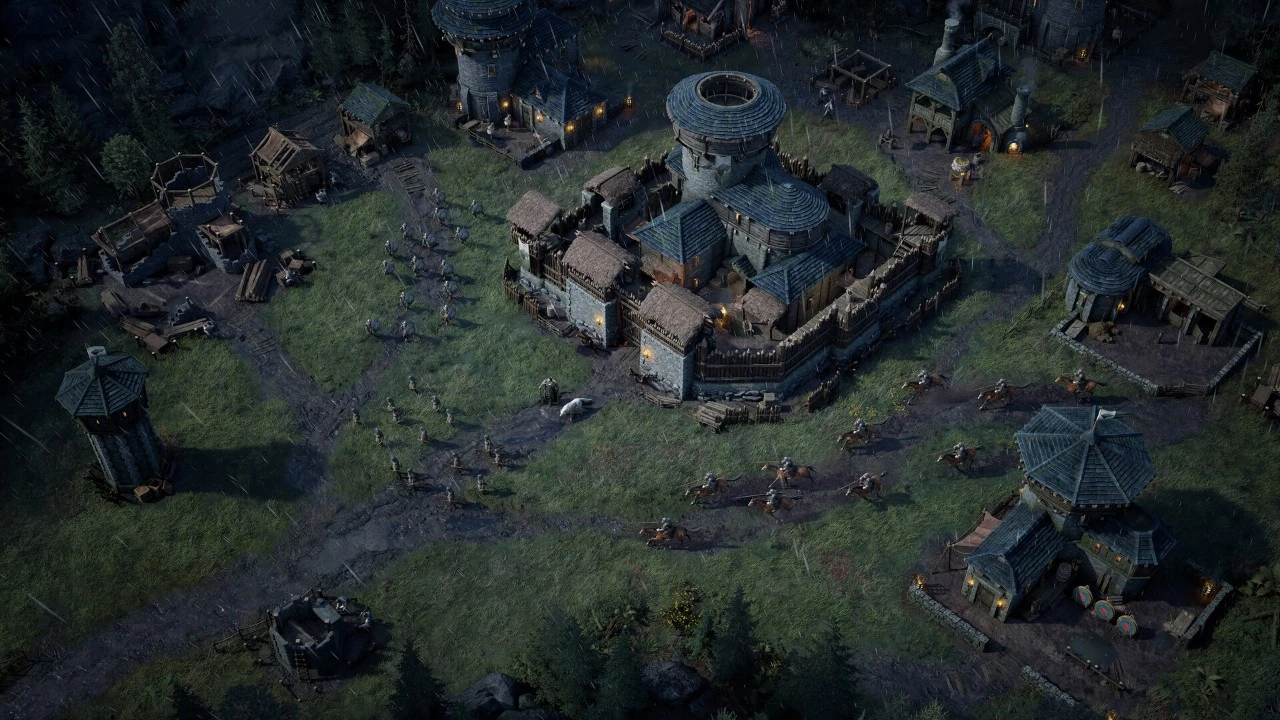
The highly anticipated real-time strategy game Game of Thrones: War for Westeros, first announced approximately one year ago, has been pushed back from its original 2025 release window to early 2027. Australian developer PlaySide Studios made the announcement, citing the familiar refrain heard across the gaming industry: the decision was made to ensure the highest possible quality for the final product. This delay adds the title to a growing list of ambitious games that have required additional development time to meet player expectations in an increasingly competitive market.
The irony of a Game of Thrones project experiencing significant delays has not been lost on fans of the franchise. Author George R.R. Martin himself has become notorious for the extended gaps between his novels in A Song of Ice and Fire series, with devoted readers still waiting for The Winds of Winter more than a decade after the previous installment. In some ways, PlaySide appears to be following in Martin’s footsteps, prioritizing craftsmanship over adherence to arbitrary deadlines—a philosophy that has both frustrated and ultimately rewarded fans of the fantasy saga.
A Crowded Field of Westeros Adaptations
Game of Thrones: War for Westeros enters an interesting landscape for adaptations of Martin’s sprawling fantasy world. The franchise has seen numerous video game interpretations over the years, with varying degrees of success. From Telltale’s episodic adventure series to Cyanide Studio’s RPG and various mobile strategy games, developers have attempted to capture the political intrigue, brutal warfare, and complex character dynamics that define the source material. The real-time strategy genre seems particularly well-suited to the franchise, given its emphasis on commanding armies, managing resources, and engaging in the kind of large-scale conflicts that defined key moments in both the books and the HBO television series.
PlaySide Studios, founded in 2012 and headquartered in Melbourne, Australia, has grown into one of the largest independent game developers in the country. The studio has experience working on licensed properties and has built a reputation for quality mobile and console titles. Taking on a franchise as beloved and scrutinized as Game of Thrones represents both a significant opportunity and a considerable challenge, as fan expectations remain extraordinarily high despite the controversial final season of the television adaptation in 2019.
The Reality of Modern Game Development
The decision to delay Game of Thrones: War for Westeros reflects broader trends in the video game industry, where development timelines have stretched considerably over the past decade. Modern games require increasingly sophisticated graphics, complex systems, extensive voice acting, and rigorous quality assurance testing. High-profile releases that launched in unfinished states—such as Cyberpunk 2077 in 2020—have made both developers and publishers more cautious about committing to release dates before games are truly ready. Players have generally responded positively to delays when the extra time results in polished, complete experiences at launch.
For strategy game enthusiasts, the wait for War for Westeros comes during a renaissance period for the genre. Recent years have seen successful releases in the Total War series, the continued popularity of Crusader Kings and other Paradox titles, and innovative newcomers that have expanded what strategy games can accomplish. PlaySide will need to deliver something special to stand out in this competitive environment while also satisfying the demanding fanbase that comes with any Game of Thrones project. The additional development time until early 2027 should theoretically allow the studio to refine gameplay mechanics, enhance visual fidelity, and ensure that the game authentically captures the essence of Martin’s complex world of noble houses, ancient magic, and brutal political maneuvering.
What Fans Can Expect
While specific details about gameplay mechanics and story content remain limited, the real-time strategy format suggests players will likely command armies representing various factions from the Seven Kingdoms and beyond. The rich lore of Westeros provides ample material for campaigns, with conflicts ranging from Robert’s Rebellion to the War of the Five Kings offering dramatic backdrops for strategic gameplay. Whether PlaySide will focus on a specific era or allow players to explore multiple time periods remains to be seen, but the delay suggests the studio is committed to delivering a comprehensive experience worthy of the license.
Expert Opinion: The delay of Game of Thrones: War for Westeros to 2027 represents a calculated risk that could ultimately benefit both the game and the broader franchise. Given the mixed reception to recent Westeros-related content, PlaySide has every incentive to ensure their strategy title exceeds expectations rather than joining the list of forgettable licensed games. If the studio successfully captures the political depth and military grandeur of Martin’s world, they could establish a new benchmark for fantasy strategy games and potentially revitalize interest in Game of Thrones gaming adaptations.