
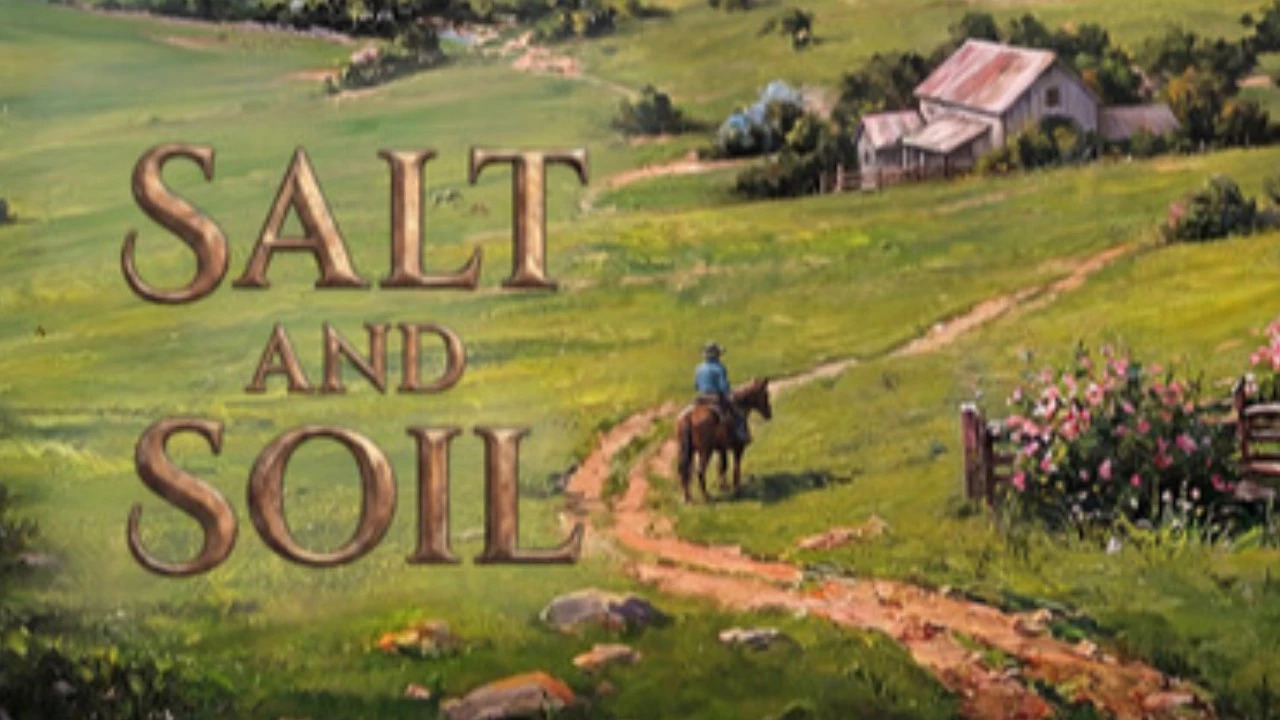
In a bold move that signals a potential shift in game development paradigms, veteran game developer Sergey Orlovsky has officially announced Salt and Soil, a family colony simulator being created with extensive artificial intelligence assistance. What makes this announcement particularly noteworthy is the developer’s transparency about AI’s role in the project — a refreshing departure from an industry that has often kept such involvement under wraps. The game is being developed by a single person over a six-month period, with AI tools integrated not only into the creation process but also into the gameplay experience itself.
Orlovsky, known for his work in the Russian gaming industry and his involvement with Nival Interactive, one of the region’s most prominent game development studios, has chosen to embrace AI technology openly at a time when many developers remain hesitant to discuss their use of such tools. This transparency comes amid ongoing debates about AI’s role in creative industries, with concerns ranging from job displacement to questions about artistic authenticity. By announcing his approach upfront, Orlovsky is positioning himself at the forefront of what may become a new standard in game development disclosure.
A New Era of Solo Game Development
The announcement of Salt and Soil highlights a remarkable trend in the gaming industry: the democratization of game development through AI assistance. What once required teams of dozens or even hundreds of developers can now potentially be accomplished by a single individual armed with the right AI tools. Orlovsky’s six-month development timeline for a strategy game would have been considered impossible just a few years ago, when similar projects typically required years of work and substantial teams covering programming, art, design, and quality assurance.
The family colony simulator genre itself has seen significant growth in recent years, with titles like RimWorld, Dwarf Fortress, and Going Medieval capturing the imagination of players who enjoy managing settlements and guiding characters through challenging survival scenarios. Salt and Soil appears to be entering this competitive space with a unique proposition — not just AI-assisted development, but AI-integrated gameplay that promises to create dynamic, responsive experiences for players.
AI Integration Beyond Development
Perhaps the most intriguing aspect of Salt and Soil is the promise of AI integration during actual gameplay. While details remain limited, this suggests that artificial intelligence will play an active role in generating content, managing NPC behaviors, or creating dynamic narrative elements as players progress through the game. This approach could potentially solve one of the most persistent challenges in colony simulators: maintaining freshness and unpredictability over extended play sessions.
The gaming industry has been gradually incorporating AI for years, from procedural generation algorithms to sophisticated NPC behavior systems. However, the new generation of large language models and generative AI tools represents a quantum leap in capabilities. Games like AI Dungeon have already demonstrated the potential for AI-driven narrative experiences, and Salt and Soil may be taking this concept into the strategy genre with more structured gameplay mechanics.
Industry Implications and Controversy
Orlovsky’s transparent approach stands in stark contrast to the secrecy that has surrounded AI use in many recent game releases. Several titles have faced backlash after players discovered undisclosed AI-generated content, particularly in artwork and voice acting. By announcing AI involvement upfront, the Salt and Soil team is essentially conducting an experiment in consumer acceptance — testing whether gamers will embrace AI-assisted development when it’s presented honestly rather than hidden.
The timing of this announcement is significant, coming during a period of intense scrutiny of AI in creative industries. Game developers’ unions and advocacy groups have raised concerns about AI potentially replacing human workers, while others argue that these tools simply represent the next evolution in development technology — similar to how game engines and middleware transformed the industry in previous decades. Orlovsky’s solo development model could be seen as evidence for either position, depending on one’s perspective.
As the gaming community awaits more details about Salt and Soil, this announcement may prove to be a watershed moment for AI transparency in game development. Whether other developers follow Orlovsky’s lead in openly discussing their AI usage remains to be seen, but the conversation has undoubtedly been advanced. The success or failure of Salt and Soil could influence how the entire industry approaches AI disclosure in the years to come.
Expert Opinion: The open acknowledgment of AI assistance in Salt and Soil represents a calculated risk that could pay significant dividends if the game delivers quality gameplay. Industry analysts suggest that transparency may become a competitive advantage as consumers grow increasingly skeptical of undisclosed AI content. This project will serve as a crucial case study for determining whether the gaming community’s resistance to AI is primarily about the technology itself or about the perceived deception when its use goes unannounced.