
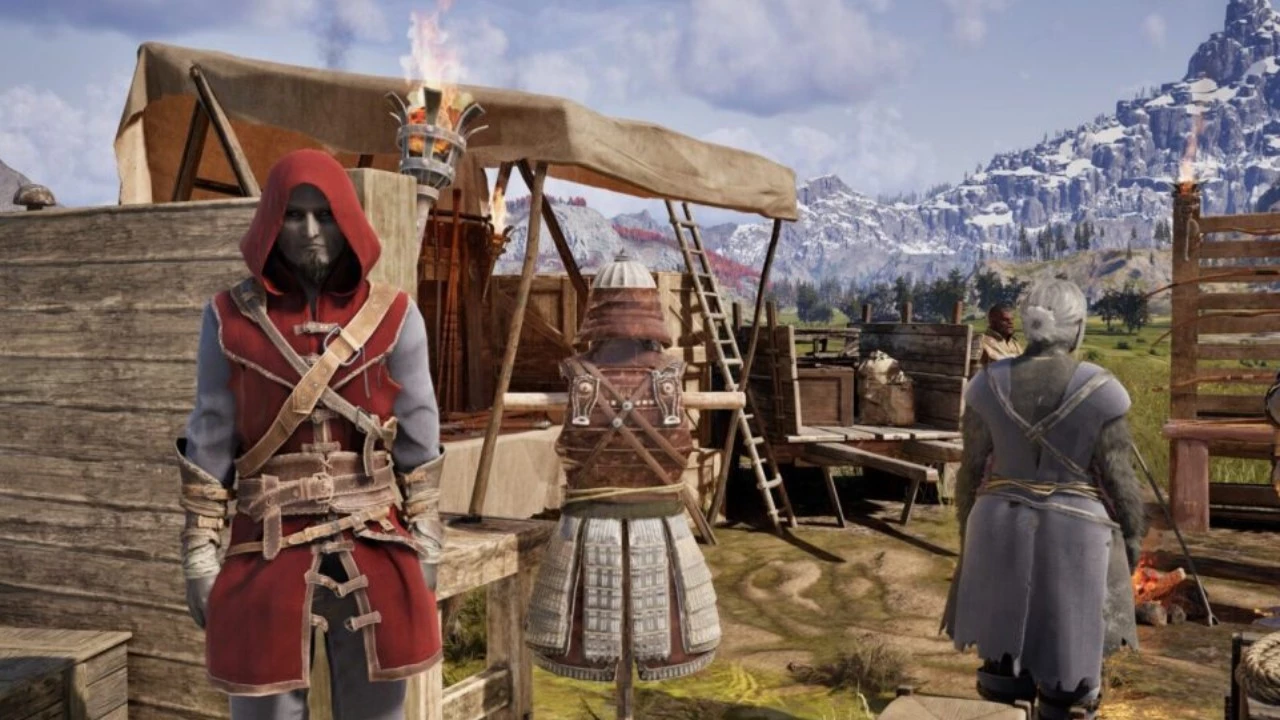
The development team behind the hardcore sandbox MMORPG Mortal Online 2 has issued an important reminder to players regarding the rules and regulations governing the placement of structures within the game’s territory control system. In a recent announcement, Star Vault AB emphasized that players bear full responsibility for selecting appropriate building locations, urging guild leaders and landowners to carefully survey potential construction sites before committing resources to permanent installations. This warning comes as the game continues to evolve its complex territorial warfare mechanics that have become a cornerstone of the player experience.
Key Points
- Star Vault warns that guilds are fully responsible for structure placement—no developer bailouts for bad locations
- Terrain analysis is critical: resource access, monster spawn proximity, and chokepoints determine a base’s long-term viability
- Recent player influx means many newcomers lack experience with the game’s unforgiving construction mechanics
- Poorly placed structures become permanent liabilities that guilds must either defend indefinitely or abandon entirely
- Supply routes, defensive geography, and rival territory proximity all factor into successful territorial expansion
Mortal Online 2, developed by Swedish studio Star Vault, represents one of the most ambitious attempts at creating a truly player-driven sandbox MMO experience in recent years. The game launched in January 2022 after a lengthy development period and has cultivated a dedicated community of players who appreciate its unforgiving approach to online gaming. Unlike many modern MMORPGs that offer hand-holding experiences, Mortal Online 2 throws players into a dangerous world where territorial control, resource management, and guild politics determine success or failure.
How Territory Control Works in Mortal Online 2
The territory control system in Mortal Online 2 serves as one of the game’s most complex and engaging features, allowing guilds to establish dominance over regions through strategic placement of various structures. These buildings range from simple outposts to elaborate fortifications that can house dozens of players and store valuable resources. The system encourages large-scale cooperation and competition between player organizations, creating emergent gameplay scenarios that have defined the game’s most memorable moments. However, this freedom comes with significant risks, as poorly planned construction can lead to devastating consequences for unprepared guilds.
The developers’ warning specifically addresses the importance of terrain analysis before construction begins. In Mortal Online 2, the landscape features dynamic elements including resource nodes, spawn points for creatures, and strategic chokepoints that can make or break a settlement’s viability. Building in an area with insufficient access to essential materials like stone, wood, or ore can cripple a guild’s ability to maintain and defend their holdings. Additionally, structures placed too close to dangerous monster territories may face constant attacks that drain resources and manpower from defensive efforts.
Why Star Vault Is Issuing This Reminder Now
This announcement reflects Star Vault’s ongoing commitment to maintaining clear communication with their player base while preserving the game’s philosophy of player agency and consequence. Throughout Mortal Online 2’s lifespan, the development team has consistently emphasized that their role is to create systems and rules rather than to protect players from their own decisions. This design philosophy has roots in classic MMORPGs like Ultima Online, which similarly trusted players to navigate complex social and mechanical systems without extensive developer intervention. The approach has attracted players seeking genuine challenge and meaningful choices in their gaming experiences.
The timing of this reminder is particularly relevant as Mortal Online 2 has seen increased player activity following recent content updates and system improvements. New guilds forming in the game may not be fully aware of the intricacies involved in territorial expansion, making educational outreach from the development team valuable for community health. Veterans of the game have long understood that location scouting is as crucial as combat preparation, but newer players often learn this lesson through costly mistakes that can set their organizations back significantly.
What Guild Leaders Should Evaluate Before Building
For guild leaders planning expansion, several factors merit careful consideration beyond the immediate surroundings of a proposed building site. Supply lines connecting structures to trading hubs, defensive terrain features that could aid or hinder fortification efforts, and proximity to rival guild territories all play crucial roles in long-term survival. The developers have historically declined to intervene when players construct in suboptimal locations, meaning that mistakes in placement become permanent burdens that guilds must either overcome or abandon entirely. This unforgiving approach has created some of the game’s most dramatic stories of triumph and failure.
As Mortal Online 2 continues to develop and attract new players to its challenging world, announcements like this serve as important touchstones for community expectations. The game represents a niche but passionate segment of the MMO market that values player freedom and meaningful consequences above convenience and accessibility. For those willing to embrace its demanding nature, the territory control system offers experiences unavailable in more conventional online games, making proper understanding of its rules essential for any aspiring conqueror.
The Broader Implications for Mortal Online 2's Meta
This announcement reinforces Star Vault’s hands-off design philosophy inherited from old-school sandboxes like Ultima Online. The studio builds systems and sets rules, but refuses to rescue players from poor decisions. For territorial gameplay, this means every guild placement is a high-stakes commitment with no reset button.
The timing matters. Mortal Online 2 has experienced a population bump following recent patches, drawing in guilds unfamiliar with how punishing bad real estate choices can be. Veteran organizations already treat location scouting like a military operation; newer groups often learn only after sinking resources into indefensible or resource-starved positions.
Looking ahead, the explicit reminder suggests Star Vault may be preparing content that intensifies territorial competition—sieges, new resource mechanics, or expanded buildable zones. Guilds treating this warning casually could find themselves outmaneuvered when the stakes rise further.
Common Questions
Can you relocate a guild structure in Mortal Online 2?
No. Once a structure is placed, it becomes a permanent fixture. Guilds stuck with a bad location must either invest heavily in defending it or abandon the building and start over elsewhere, losing all invested resources.
What makes a good building location in Mortal Online 2?
Proximity to stone, wood, and ore nodes; distance from aggressive monster spawns; defensible terrain features; and viable supply lines to trade hubs. Ignoring any of these factors can cripple a settlement’s sustainability.
Will developers help if my guild builds in a bad spot?
Star Vault has consistently declined to intervene. Their design philosophy places full responsibility on players, so there is no support ticket or rollback for construction mistakes.
Expert Opinion: The emphasis on player responsibility in Mortal Online 2’s building system reflects a broader industry trend toward sandbox experiences that prioritize emergent gameplay over curated content. As the MMO market becomes increasingly saturated with theme-park style games, titles like Mortal Online 2 carve out sustainable niches by offering experiences that cannot be replicated elsewhere. This developer announcement suggests Star Vault is preparing for increased territorial conflict, potentially indicating upcoming content that will make strategic positioning even more critical for competitive guilds.