
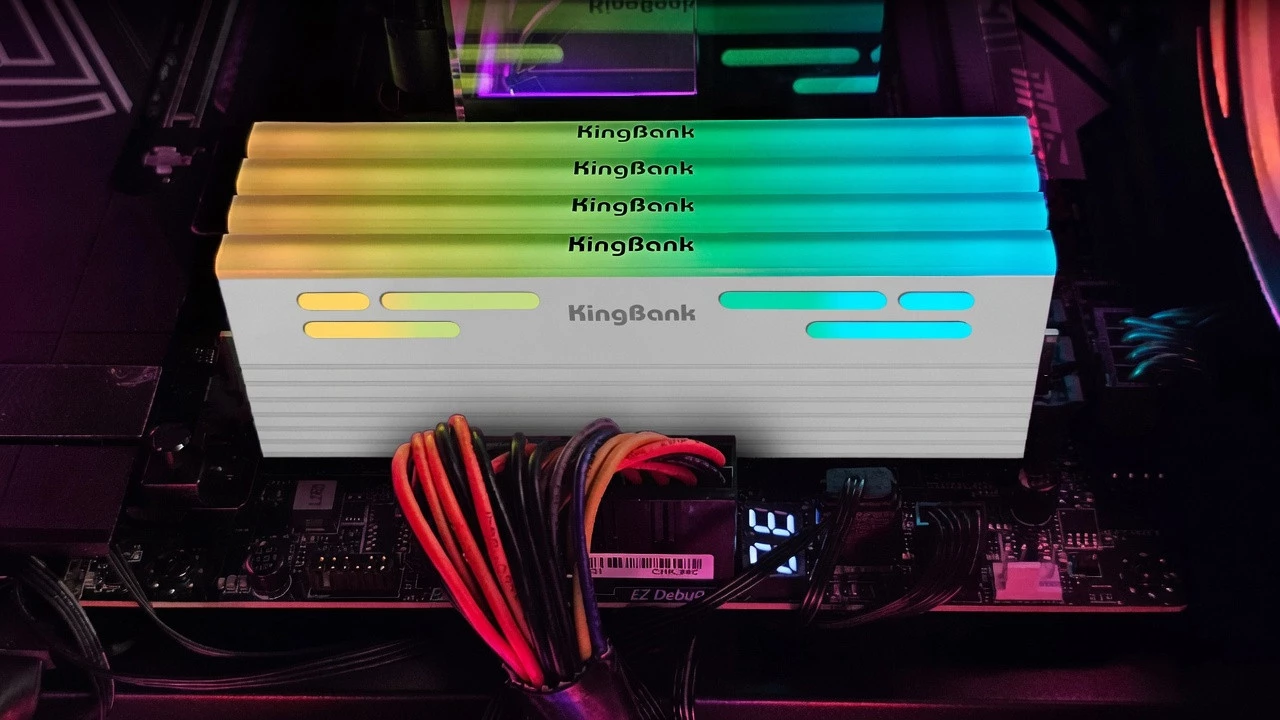
The global semiconductor industry is witnessing a significant shift as Chinese manufacturers increasingly challenge established players in the memory market. DDR5 memory modules produced by ChangXin Memory Technologies (CXMT), one of China’s leading DRAM manufacturers, have recently come under intense scrutiny following comprehensive testing by renowned overclocker Safedisk. The results have sparked widespread discussion among hardware enthusiasts and industry analysts alike, raising important questions about the competitiveness of Chinese memory products in an increasingly contested global market.
CXMT, headquartered in Hefei, Anhui Province, represents China’s ambitious push toward semiconductor self-sufficiency. Founded in 2016, the company has rapidly expanded its production capabilities and now operates one of the most advanced DRAM fabrication facilities in China. The company’s entry into the DDR5 market marks a crucial milestone, as this next-generation memory standard has become essential for modern computing platforms, offering significantly higher bandwidth and improved power efficiency compared to its DDR4 predecessor.
Testing Results Reveal Mixed Performance Metrics
The testing conducted by Safedisk, a well-known figure in the overclocking community, provided valuable insights into the real-world capabilities of CXMT’s DDR5 modules. According to the benchmark results, the Chinese-manufactured memory demonstrated competitive baseline performance when operating at standard JEDEC specifications. The modules successfully achieved rated speeds and maintained stable operation under typical workloads, suggesting that CXMT has mastered the fundamental manufacturing processes required for DDR5 production.
However, the tests also revealed certain limitations when pushing the memory beyond stock configurations. Overclocking headroom appeared more restricted compared to established brands from Samsung, SK Hynix, and Micron. Memory enthusiasts noted that achieving extreme frequencies required higher voltages, which could potentially impact long-term reliability and thermal performance. These findings align with expectations for a relatively new entrant in the high-performance memory segment, where years of manufacturing experience often translate into superior binning and chip quality.
Market Implications and Industry Context
The emergence of competitive Chinese DDR5 products carries significant implications for the global memory market. For years, the DRAM industry has been dominated by three major players: Samsung Electronics, SK Hynix, and Micron Technology. Together, these companies control approximately 95% of the global DRAM market. CXMT’s growing capabilities represent both a potential disruption to this oligopoly and a strategic priority for China’s technology independence goals, particularly amid ongoing trade tensions and export restrictions imposed by Western nations.
Industry analysts suggest that CXMT’s current DDR5 offerings are primarily targeting the mid-range consumer market, where absolute performance is less critical than value proposition. By offering competitive pricing, Chinese memory manufacturers can capture market share among budget-conscious consumers and system integrators. This strategy mirrors the approach successfully employed by Chinese manufacturers in other semiconductor segments, including NAND flash storage, where companies like YMTC have made substantial inroads despite initial quality concerns.
Future Outlook and Technological Development
Looking ahead, the trajectory of Chinese DRAM development will depend heavily on continued investment in research and development, as well as access to advanced manufacturing equipment. The current generation of CXMT products reportedly utilizes process nodes several generations behind industry leaders, which partially explains the performance gaps observed in enthusiast testing. However, the company has announced aggressive plans to advance its manufacturing technology, with significant capital expenditure allocated toward next-generation production capabilities.
For consumers, the availability of additional DDR5 suppliers could eventually translate into more competitive pricing and greater product diversity. As CXMT and other Chinese manufacturers refine their processes and expand production volumes, the performance gap with established brands is expected to narrow. Industry observers recommend that buyers carefully evaluate their specific requirements when considering Chinese-manufactured memory, recognizing that while value-oriented builds may benefit from competitive pricing, high-performance systems demanding extreme overclocking capabilities might still favor established manufacturers with proven track records.
Expert Opinion: The emergence of competitive DDR5 products from CXMT signals a maturing Chinese semiconductor industry that cannot be ignored by global competitors. While current performance gaps exist, particularly in overclocking scenarios, the rapid pace of improvement suggests that within two to three product generations, Chinese memory manufacturers could achieve near-parity with established leaders. This development will likely accelerate price competition across the entire DDR5 market, ultimately benefiting consumers worldwide while reshaping the competitive dynamics of the global memory industry.