
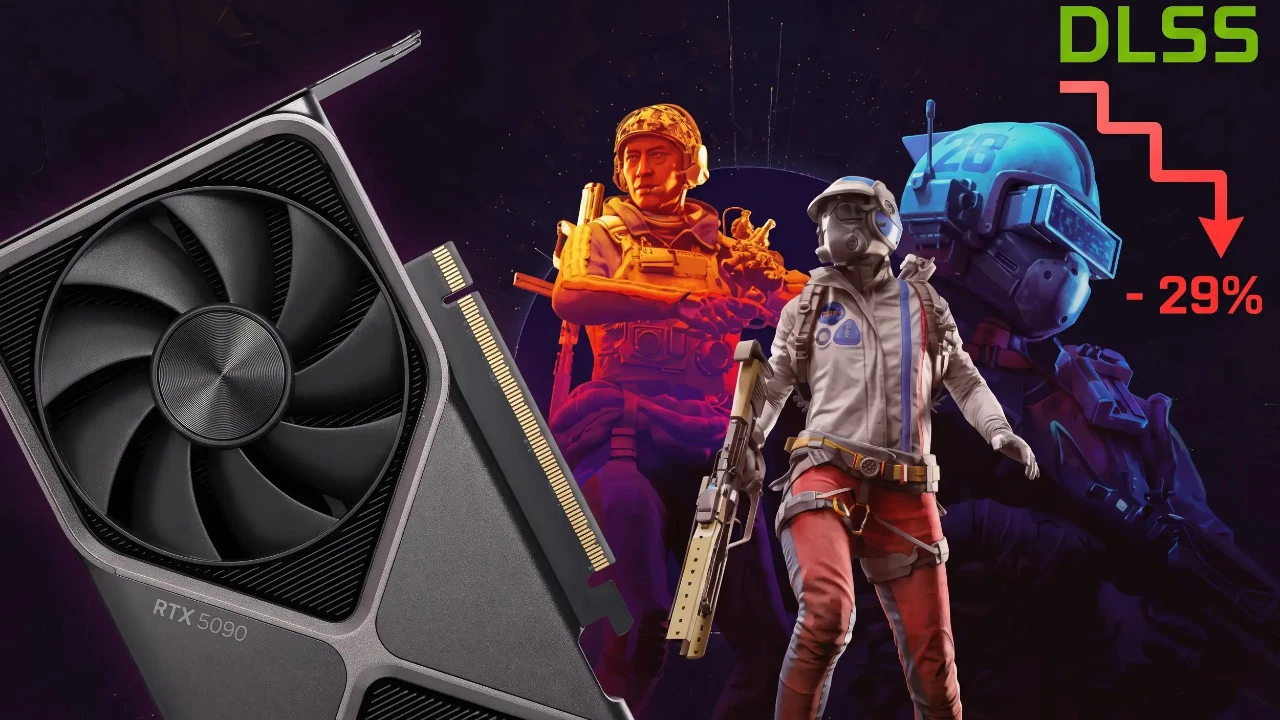
Recent benchmark testing and performance analysis of NVIDIA’s flagship GeForce RTX 50 series graphics cards, including the highly anticipated RTX 5090, have uncovered a surprising and concerning issue related to the use of intelligent upscaling technologies. According to detailed investigations by hardware analysts and independent testers, these next-generation GPUs may experience significant performance degradation of up to 29% when utilizing DLSS (Deep Learning Super Sampling) in certain scenarios, pointing to what appears to be a fundamental architectural limitation in the new Blackwell architecture.
This discovery has sent ripples through the gaming and professional graphics community, as DLSS has become one of NVIDIA’s most celebrated features since its introduction with the RTX 20 series in 2018. The technology uses artificial intelligence and dedicated Tensor cores to upscale lower-resolution images to higher resolutions in real-time, theoretically providing both improved visual quality and significantly better frame rates. For the RTX 50 series to potentially underperform in this key area represents an unexpected setback for what was positioned as NVIDIA’s most powerful consumer graphics lineup to date.
Understanding the Performance Bottleneck
The root cause of this performance issue appears to lie in the memory bandwidth and cache architecture of the RTX 50 series. While NVIDIA has substantially increased the raw computational power of these GPUs, with the RTX 5090 boasting unprecedented shader performance and ray tracing capabilities, the data pathways required for DLSS operations seem to create bottlenecks under specific workloads. When DLSS attempts to reconstruct frame data using its neural network algorithms, the demand on memory subsystems can exceed optimal thresholds, resulting in the processor waiting for data rather than actively computing.
Hardware analysts have noted that this issue becomes more pronounced at certain resolution and quality setting combinations. The 29% performance loss figure represents a worst-case scenario, typically observed when running DLSS Quality mode at 4K resolution with ray tracing enabled in graphically demanding titles. At lower resolutions or with DLSS Performance mode, the degradation is less severe but still measurable, ranging from 8% to 15% in various test scenarios. This variability suggests that the problem is closely tied to the specific balance between computational load and memory bandwidth requirements.
Historical Context and Industry Implications
This is not the first time NVIDIA has faced architectural challenges with new GPU generations. The company’s RTX 20 series initially received criticism for its early DLSS implementation, which produced noticeable visual artifacts and inconsistent performance gains. However, NVIDIA addressed these concerns through software updates and the introduction of DLSS 2.0 and subsequent versions, eventually transforming the technology into an industry-leading feature that competitors have struggled to match. AMD’s competing FSR (FidelityFX Super Resolution) technology, while more widely compatible, has generally been considered inferior in image quality to DLSS’s AI-driven approach.
The current situation with the RTX 50 series raises questions about whether this is a hardware limitation that can be mitigated through driver optimizations or whether it represents a more fundamental design constraint. NVIDIA has historically been adept at improving performance through software updates post-launch, with some GPUs gaining 10-20% performance improvements over their lifetime through driver refinements. Industry experts suggest that the company is likely already aware of this issue and may have driver updates in development to address the memory bandwidth constraints.
For consumers considering the RTX 50 series, particularly the flagship RTX 5090 with its expected premium pricing above $1,500, this discovery adds complexity to purchasing decisions. While native rendering performance remains exceptional, the reduced effectiveness of DLSS could impact the value proposition for gamers who rely heavily on this feature for achieving high frame rates at elevated resolutions. Professional users in content creation and AI development workflows may be less affected, as their use cases differ significantly from real-time gaming scenarios.
Looking Ahead: Potential Solutions and Market Response
As the PC gaming industry awaits NVIDIA’s official response to these findings, speculation continues about potential remediation strategies. Some analysts suggest that DLSS 4, expected to launch alongside the RTX 50 series, may include optimizations specifically designed to work around these architectural limitations. Others point to the possibility of firmware-level adjustments to cache allocation and memory timing that could reduce the performance impact. The competitive pressure from AMD’s upcoming RDNA 4 architecture and Intel’s continued development of Arc GPUs adds urgency to NVIDIA’s need to address this situation effectively before widespread consumer adoption of the new series.
Expert Opinion: While this architectural limitation is concerning, NVIDIA’s track record suggests they will likely address these issues through driver optimizations within the first few months post-launch. However, potential buyers should wait for post-launch benchmarks before committing to RTX 50 series purchases, as the true impact on real-world gaming scenarios may differ from current testing conditions. This situation also highlights the increasing complexity of modern GPU architectures and the delicate balance required between raw computational power and supporting subsystems.