
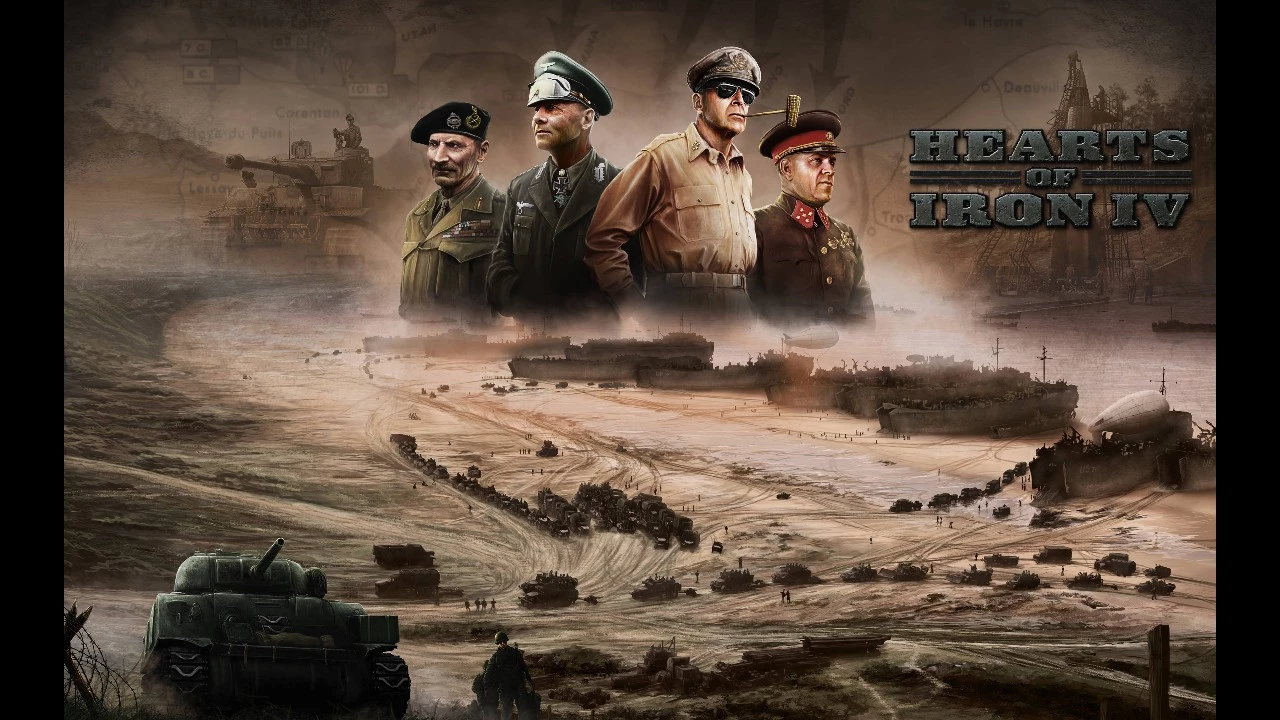
The development team behind Paradox Interactive’s acclaimed World War II grand strategy game Hearts of Iron IV has once again reached out to their dedicated community to discuss the future direction of the title. In their latest developer diary, game designer Zwirbaum invited players to share their thoughts on one of the game’s most fundamental mechanics — the military production system. The discussion hints at potentially significant changes to how players will manufacture weapons, vehicles, and equipment in future updates, marking what could be one of the most substantial modifications to the game’s core gameplay since its 2016 release.
Key Points
- Designer Zwirbaum opened community discussion on overhauling the military factory and equipment production system, unchanged since 2016 launch
- Players report the efficiency penalty for switching production lines feels punishing; requests include better control over equipment variants
- Any redesign must balance accessibility for newcomers against the strategic depth veterans expect from factory, dockyard, and resource management
- Paradox previously demonstrated willingness to gut core systems with the No Step Back supply rework, setting precedent for major changes
- Hearts of Iron IV still draws tens of thousands of concurrent Steam players eight years post-release, justifying continued investment
Eight Years of Expansions Built on Core Systems
Hearts of Iron IV has established itself as one of the most complex and rewarding grand strategy experiences available, allowing players to take control of any nation during the tumultuous period surrounding World War II. Since its initial launch eight years ago, Paradox has consistently expanded and refined the game through numerous expansions, including Man the Guns, La Résistance, No Step Back, and By Blood Alone, each adding new layers of historical authenticity and strategic options. The current military production system requires players to assign factories to specific equipment types, manage production efficiency, and balance resource allocation across multiple military branches — a system that has remained largely unchanged since the game’s inception.
The production mechanics have long been considered both a strength and a point of contention within the community. Veterans appreciate the depth it provides, forcing difficult decisions about whether to produce more infantry equipment, invest in tanks, or build up an air force. However, newer players often find the system overwhelming, with its complex interplay of civilian factories, military factories, dockyards, and resource management creating a steep learning curve. Industry experts note that Paradox has historically shown willingness to completely reimagine core systems when necessary, as demonstrated by their dramatic overhaul of supply mechanics in the No Step Back expansion.
Paradox Asks Players What Works and What Doesn't
Paradox Interactive has built its reputation partly on maintaining an unusually close relationship with its player base, regularly soliciting feedback through developer diaries, forums, and social media channels. This collaborative approach has helped the company identify pain points and opportunities that might otherwise go unnoticed. The current discussion around military production reflects this philosophy, with Zwirbaum specifically asking players to identify which aspects of the system they find most engaging and which elements feel tedious or unnecessarily complicated. Early community responses have highlighted concerns about the current efficiency system, which can make switching production lines feel punishing, as well as requests for more granular control over equipment variants and modernization programs.
Historical context plays a crucial role in Hearts of Iron IV’s appeal, and any changes to the production system must balance gameplay considerations with authentic representation of wartime manufacturing challenges. During World War II, nations faced extraordinary industrial pressures, with countries like the United States transforming their entire economies to support the war effort. The famous Arsenal of Democracy produced over 300,000 aircraft and 100,000 tanks during the conflict, while the Soviet Union relocated entire factories beyond the Ural Mountains to escape German advance. Capturing this industrial drama while maintaining accessible gameplay represents a significant design challenge that Paradox must navigate carefully.
Potential Directions for Production Mechanics
While specific details about potential changes remain speculative, the developer diary suggests that Paradox is considering fundamental alterations rather than minor tweaks. Possible directions could include streamlined factory assignment systems, more dynamic efficiency calculations, or entirely new mechanics reflecting technological advancement and industrial mobilization. The development team has emphasized that any changes would aim to preserve strategic depth while reducing unnecessary micromanagement — a balance that has defined Paradox’s approach to game design across titles like Crusader Kings III and Victoria 3.
The timing of these discussions is particularly noteworthy, as Hearts of Iron IV continues to maintain a strong player base nearly a decade after release. Steam statistics regularly show tens of thousands of concurrent players, demonstrating the enduring appeal of Paradox’s approach to historical strategy gaming. Whatever direction the developers ultimately choose, the community’s active participation in shaping these changes reflects the unique relationship between Paradox and its players — a partnership that has kept Hearts of Iron IV relevant and evolving long past the typical lifespan of strategy titles.
Production Overhaul Could Define HOI4's Next Era
The factory system sits at the heart of every Hearts of Iron IV campaign. Retooling it is not a balance patch—it would reshape how nations mobilize, how players punish or exploit AI economies, and how multiplayer metas develop. Paradox’s explicit call for feedback suggests internal prototypes already exist; the studio rarely floats hypotheticals without groundwork.
Newer players stand to gain the most if efficiency penalties and micromanagement shrink, but veterans risk losing optimizations they have mastered over thousands of hours. Paradox faced identical tensions during the supply rework: initial backlash gave way to broader acceptance once strategies adapted. Expect a similar arc here.
Strategically, a production revamp likely serves as scaffolding for future paid content—new focus trees or mobilization laws that only make sense under updated rules. Players should watch upcoming dev diaries for hints about what DLC themes might pair with these mechanical changes.
Frequently Asked Questions
When will the Hearts of Iron 4 production system changes release?
No timeline has been announced. The developer diary only opened discussion; actual implementation would follow months of iteration and likely ship alongside a major expansion rather than a free patch.
Will the HOI4 production overhaul break existing save games?
Paradox has not confirmed, but past system-level changes like the No Step Back supply rework were not save-compatible. Players should expect to start new campaigns once the update lands.
Is Hearts of Iron 5 in development?
Paradox has not announced a sequel. The scope of this production discussion suggests the studio intends to extend HOI4’s lifespan rather than sunset it for a new title in the near term.
Expert Opinion: The consideration of a production system overhaul suggests Paradox is preparing Hearts of Iron IV for another multi-year lifecycle extension, potentially positioning the title to remain competitive until a hypothetical Hearts of Iron V enters development. Given Paradox’s track record with the supply system rework, players should expect any changes to initially disrupt established strategies before ultimately deepening the gameplay experience. This move likely signals at least two more major expansions on the horizon, as such fundamental changes typically serve as foundations for new content rather than standalone updates.