
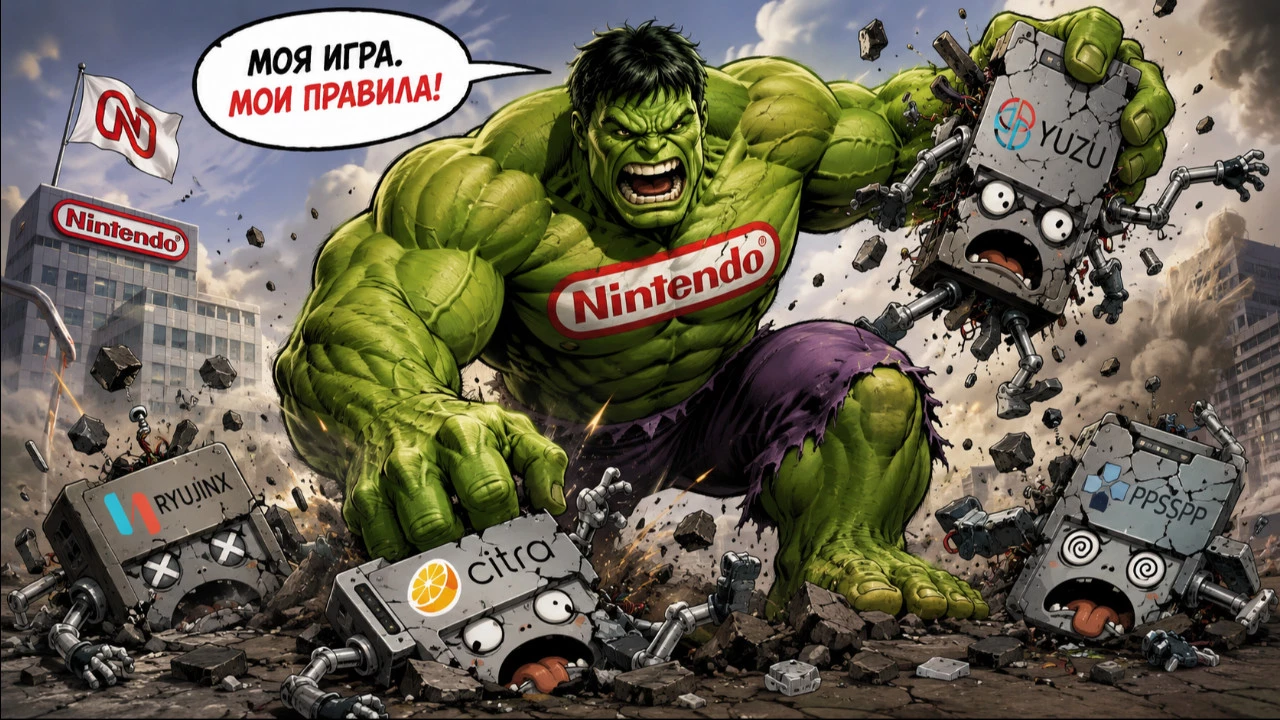
Nintendo has launched another devastating blow against the emulation community, successfully demanding the removal of more than 400 repositories from the GitHub platform in a single coordinated legal campaign. This aggressive action marks one of the largest takedown operations in the history of video game emulation, demonstrating the Japanese gaming giant’s unwavering commitment to protecting its intellectual property and the Nintendo Switch ecosystem from what it considers unauthorized software distribution.
The mass removal operation targeted repositories containing code related to Nintendo Switch emulators, tools for bypassing console security measures, and associated software that could potentially be used to play pirated games. GitHub, owned by Microsoft, complied with Nintendo’s Digital Millennium Copyright Act (DMCA) takedown requests, removing the repositories from public access. This coordinated strike follows Nintendo’s established pattern of aggressive legal action against emulation projects, but the scale of this particular operation is unprecedented in the company’s history of intellectual property enforcement.
The Ongoing War Against Emulation
Nintendo’s campaign against emulation has intensified dramatically over the past two years. The company scored a major victory in early 2024 when it successfully sued the creators of Yuzu, one of the most popular Nintendo Switch emulators. That legal battle resulted in a $2.4 million settlement and the complete shutdown of the Yuzu project. The developers behind Yuzu agreed to cease all development and distribution of the emulator, setting a powerful precedent that Nintendo has continued to leverage in subsequent enforcement actions.
The gaming industry has long debated the legality and ethics of emulation. While emulators themselves exist in a legal gray area—courts have previously ruled that emulation software can be legal if it doesn’t contain proprietary code—the practical reality is that emulators are often used in conjunction with pirated game files. Nintendo argues that emulation directly harms its business by enabling players to access games without purchasing them, undermining both hardware and software sales. The company’s legal team has become increasingly sophisticated in targeting not just emulators themselves, but the entire ecosystem of tools, guides, and resources that support them.
GitHub’s Role and Developer Community Response
GitHub’s compliance with Nintendo’s takedown requests has sparked controversy within the open-source software community. Many developers argue that hosting emulation-related code should be protected as legitimate software development, while others acknowledge that platform providers have little choice but to comply with valid DMCA notices from major corporations with extensive legal resources. The removal of over 400 repositories in a single action has sent shockwaves through the development community, with many programmers expressing concerns about the chilling effect such aggressive enforcement could have on legitimate research and preservation efforts.
Video game preservation advocates have been particularly vocal in criticizing Nintendo’s approach. They argue that emulation plays a crucial role in preserving gaming history, allowing future generations to experience classic titles that might otherwise become inaccessible as original hardware fails and official support ends. However, Nintendo maintains that current-generation console emulation—particularly for the still-active Nintendo Switch platform—goes far beyond preservation concerns and directly enables piracy of games currently being sold at retail prices.
Looking Ahead: The Future of Emulation
As Nintendo continues its aggressive legal campaign, the future of Switch emulation remains uncertain. While some developers may attempt to continue their work in jurisdictions with different intellectual property laws, the removal of repositories from major platforms like GitHub significantly disrupts the collaborative development process that most open-source projects rely upon. Industry analysts suggest that Nintendo’s actions may push emulation development further underground, making it harder to track but potentially not eliminating it entirely. The gaming giant has made clear that protecting its intellectual property remains a top priority, and developers working on emulation projects should expect continued legal pressure for the foreseeable future.
Expert Opinion: Nintendo’s unprecedented removal of 400+ repositories signals a new phase in the company’s anti-emulation strategy, moving from targeting individual high-profile projects to systematic elimination of the entire support ecosystem. This approach, combined with the Yuzu settlement precedent, suggests that current-generation console emulation may become increasingly difficult to sustain publicly. However, history has shown that emulation communities tend to adapt and relocate rather than disappear entirely, meaning this may represent a battle won rather than a war concluded.