
The development team behind Pantheon: Rise of the Fallen continues to push forward with their ambitious Combat and Progression update, sharing new details about their ongoing work. This week, the studio revealed that their primary focus has been on refining the combat system, enhancing character progression mechanics, preparing new zones for exploration, and implementing technical improvements designed to accelerate future development cycles. For fans who have been following this project for years, these updates represent meaningful steps toward the game’s eventual completion.
Combat System Overhaul and Character Progression
The combat system in Pantheon: Rise of the Fallen has been a central pillar of the game’s design philosophy since its inception. Unlike many modern MMORPGs that favor fast-paced, action-oriented combat, Pantheon aims to recapture the strategic, group-focused gameplay that defined classic titles like EverQuest and Vanguard: Saga of Heroes. The current development sprint is focused on fine-tuning ability interactions, ensuring that combat feels impactful and rewarding while maintaining the challenging difficulty that the game promises. Character progression is being carefully balanced to create meaningful advancement milestones, where each level gained represents a tangible increase in power and capability rather than a mere numerical increment.
The developers have emphasized that their approach to progression draws heavily from the golden age of MMORPGs, when reaching maximum level was a genuine accomplishment that could take months of dedicated play. This philosophy stands in stark contrast to contemporary games where level caps can be reached within days. The team is working to ensure that every class offers unique gameplay experiences, with distinct roles that encourage players to collaborate rather than compete for similar positions within a group.
New Zones and World Expansion
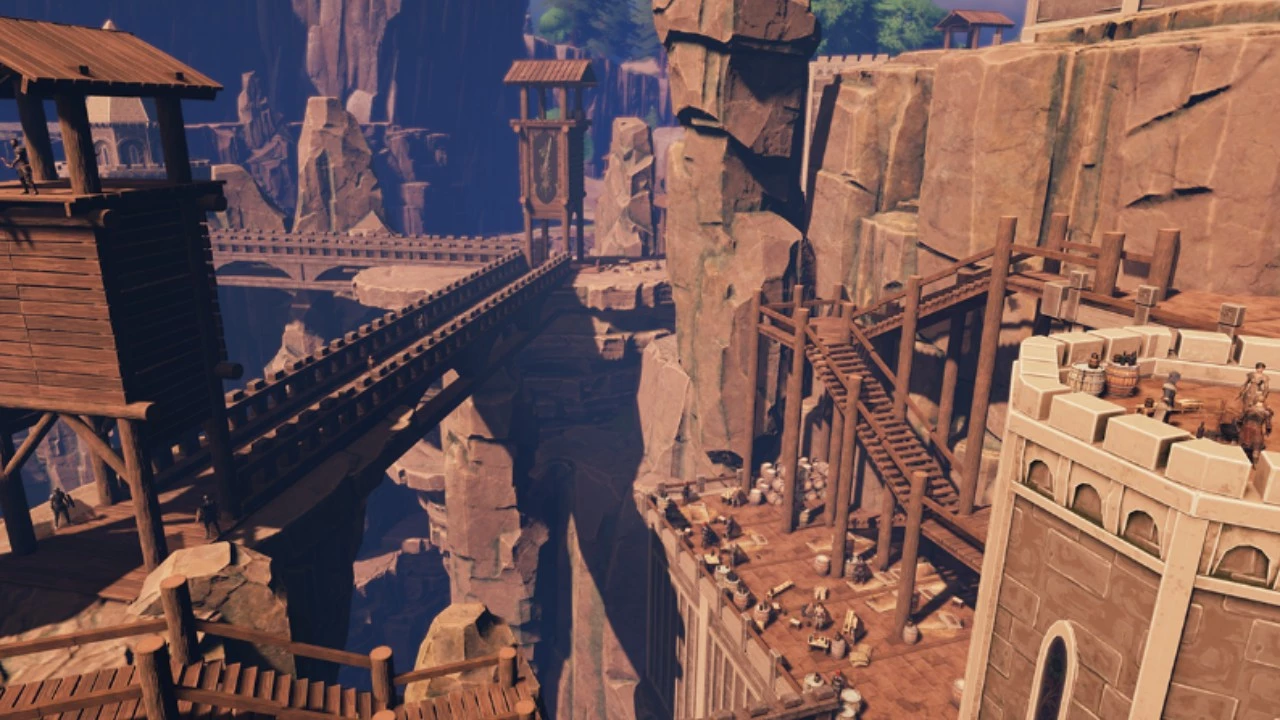
World-building remains a critical component of the ongoing development, with the team actively preparing new locations for players to explore. Pantheon’s world of Terminus is designed as a vast, interconnected realm filled with diverse biomes, ancient ruins, and dangerous territories that reward exploration and punish carelessness. The new zones currently in development are expected to offer challenging content for players of various levels, continuing the game’s commitment to creating a world that feels genuinely dangerous and mysterious.
The environmental design philosophy behind Pantheon emphasizes the concept of “perception” — a system where players must actively engage with their surroundings to discover hidden paths, uncover secret quests, and detect environmental hazards. This mechanic sets the game apart from competitors by encouraging careful observation rather than simply following quest markers to predetermined destinations. The team has stated that these new areas will feature complex layouts designed to reward attentive players who take time to learn the geography of each region.
Technical Improvements and Development Acceleration
Perhaps most significantly for the project’s long-term prospects, the development team has been implementing technical improvements aimed at streamlining their workflow. These behind-the-scenes optimizations may not be immediately visible to players but represent crucial infrastructure investments that will enable faster content creation and more efficient bug fixing in the future. The studio has historically faced challenges with development pace, making these workflow improvements potentially transformative for the project’s trajectory.
Pantheon: Rise of the Fallen has been in development since 2014, when the late Brad McQuaid — legendary designer of EverQuest — founded Visionary Realms to create a spiritual successor to the games that defined a generation of online gaming. Following McQuaid’s passing in 2019, the studio has continued his vision, though the extended development timeline has tested the patience of even the most dedicated supporters. The current transparency about development progress suggests the team is committed to maintaining community trust while working toward a playable product that honors the original vision.
Expert Opinion: The MMO genre is experiencing a renaissance of interest in classic design philosophies, and Pantheon’s continued development positions it uniquely to capture an underserved audience hungry for challenging, community-focused gameplay. However, the extended development timeline remains a concern, and the studio’s ability to deliver meaningful updates consistently will be critical in maintaining backer confidence. If these technical improvements truly accelerate development as promised, 2025 could be a pivotal year for the project.